About the Lactose Intolerance Test by GetTested
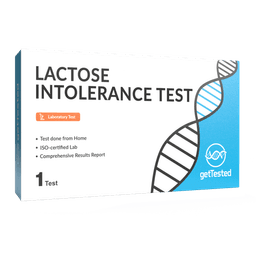
The Lactose Intolerance Test by GetTested is a comprehensive test that measures various types of lactose intolerance, such as hereditary lactose intolerance and acquired lactose intolerance.
Lactose intolerance arises when the small intestine struggles with processing lactose, the sugar in milk. It’s different from cow’s milk allergy, which requires a distinct approach to treatment.
Symptoms of Lactose Intolerance
Though lactose intolerance is mostly harmless, the symptoms can cause significant discomfort. The most common symptoms include:
- Stomach pain
- Diarrhoea
- Flatulence
- Nausea
- Bloating
Causes of Lactose Intolerance
Lactose intolerance stems from a deficiency in the lactase enzyme, essential for digesting lactose in dairy products. Usually, the lactase enzyme turns the milk sugar, or lactose, into two simple sugars that are absorbed into the bloodstream. However, if you lack lactase, the lactose remains undigested and stays in the intestine, where it interacts with normal bacteria. This is what causes the uncomfortable symptoms. Reducing or avoiding lactose often alleviates these symptoms.
Lactose Intolerance in Children
Lactose intolerance is rare in children under five. If any stomach issues arise in this age group, it often stems from cow's milk allergy. Accurate diagnosis by GetTested ensures appropriate dietary management.
Forms of Lactose Intolerance
Primary Lactose Intolerance
This hereditary form is most common in regions like Asia, Africa, and southern Europe. It arises from a gradual decrease in lactase production, typically appearing in late childhood to early adulthood.
The decrease in lactase production normally happens as children grow older and start replacing milk with other foods and drinks. Usually, lactase levels remain high enough to digest normal amounts of dairy, but in primary lactose intolerance, lactase production drops significantly by adulthood.
Secondary Lactose Intolerance
This temporary form can develop from untreated intestinal diseases, infections, or bacterial overgrowth. Conditions like celiac disease and Crohn’s disease can trigger it. It usually resolves after treating the underlying condition, though recovery may take time.
Congenital Lactose Intolerance
This rare, genetic condition means the body cannot produce lactase at all. It is inherited in an autosomal recessive pattern, meaning both parents must pass on the gene variant. It requires lifelong adherence to a lactose-free diet.
Lactose Intolerance vs. Cow's Milk Allergy
These two conditions are often confused. Lactose intolerance is a digestive issue related to milk sugar, while cow's milk allergy involves an immune response to milk proteins.
Symptoms of both can include digestive issues, but cow’s milk allergy can also cause skin rash, swelling of the lips or face, or a runny nose. It is most common in young children, who often outgrow it. GetTested offers both lactose intolerance and milk allergy tests for accurate diagnosis.
Testing Methods by GetTested
GetTested conducts two types of tests:
Breath Tests
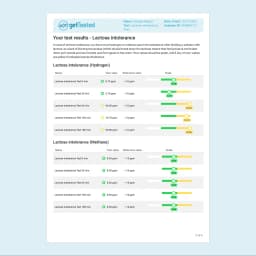
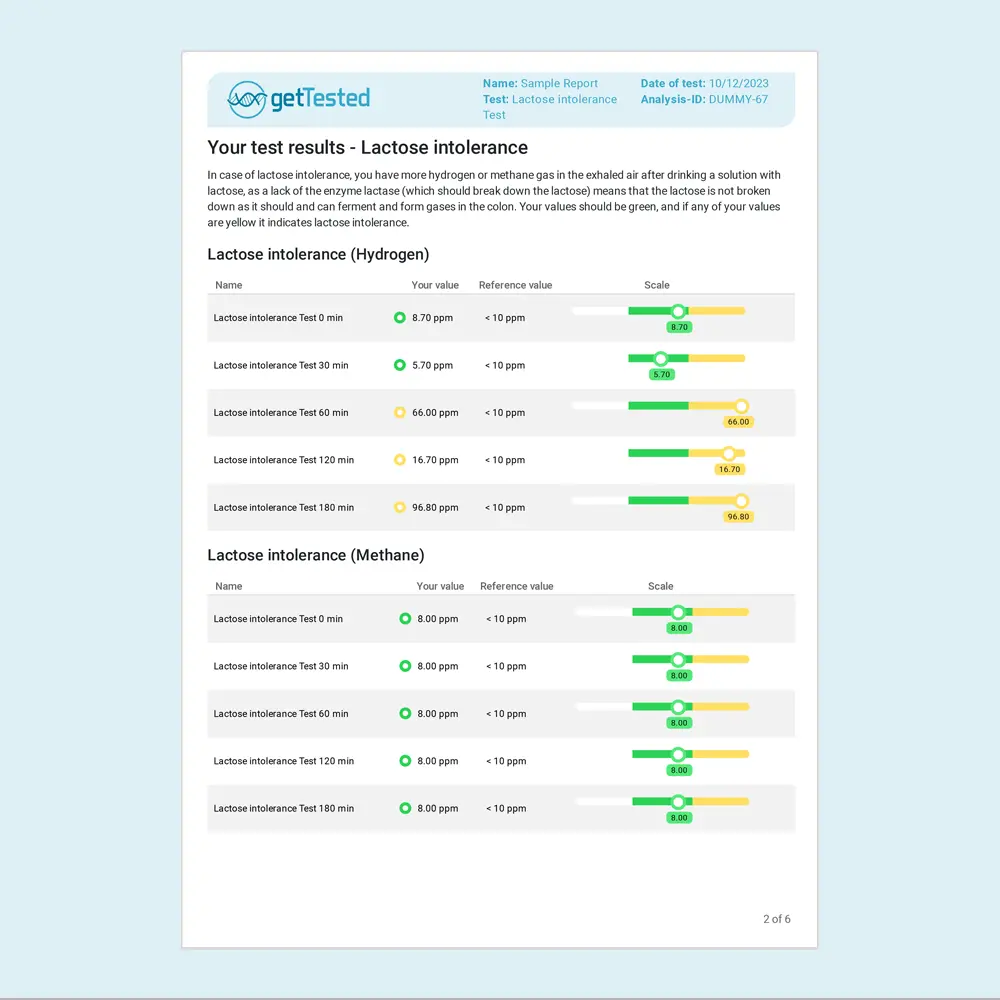
Measures hydrogen and methane levels after consuming a lactose solution. Elevated gas levels suggest lactose intolerance.
DNA Tests
Identifies hereditary lactose intolerance, though it does not confirm whether the intolerance is currently active.
Conducting the Test
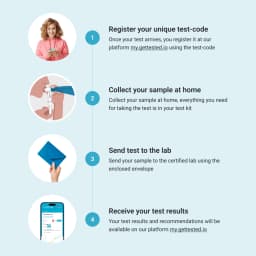
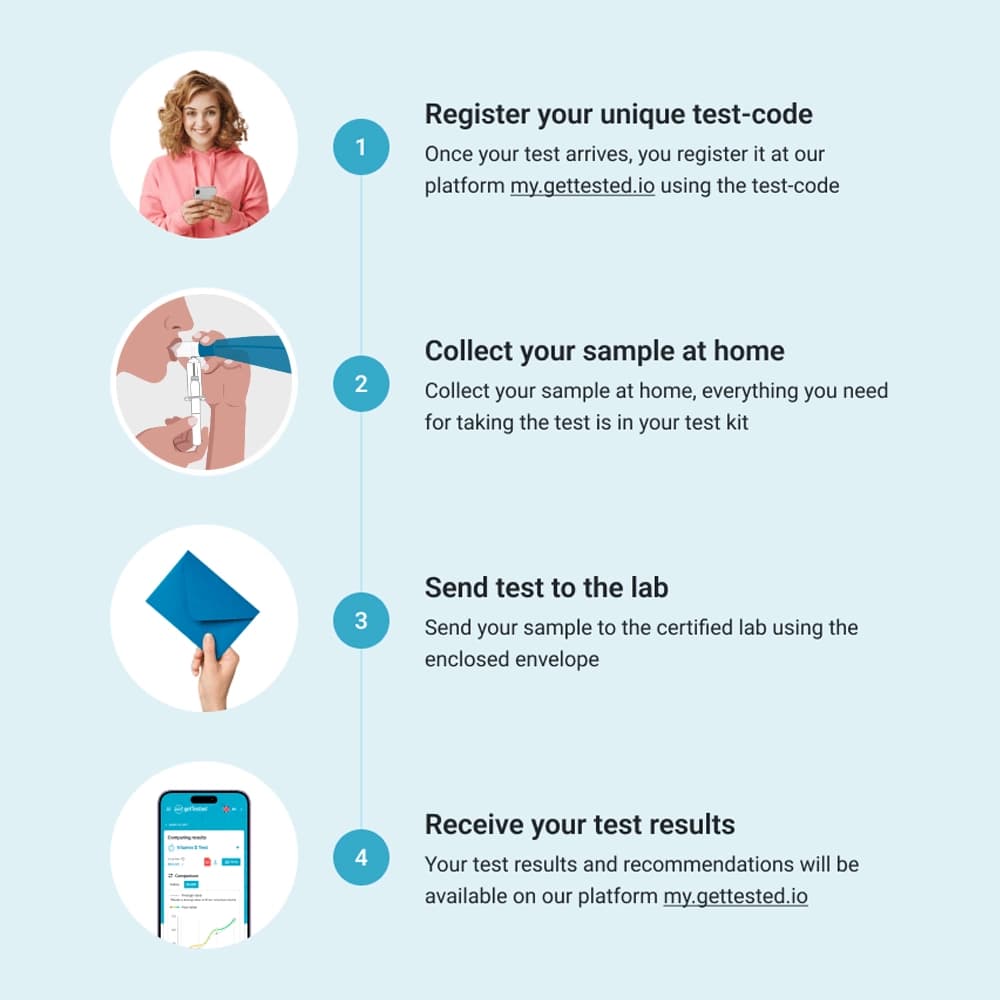
The lactose intolerance test involves collecting breath samples over three hours after drinking a lactose solution provided by GetTested. For best results, the test should be done on an empty stomach. Samples are analyzed in GetTested’s lab, and the results are delivered digitally.









 In stock
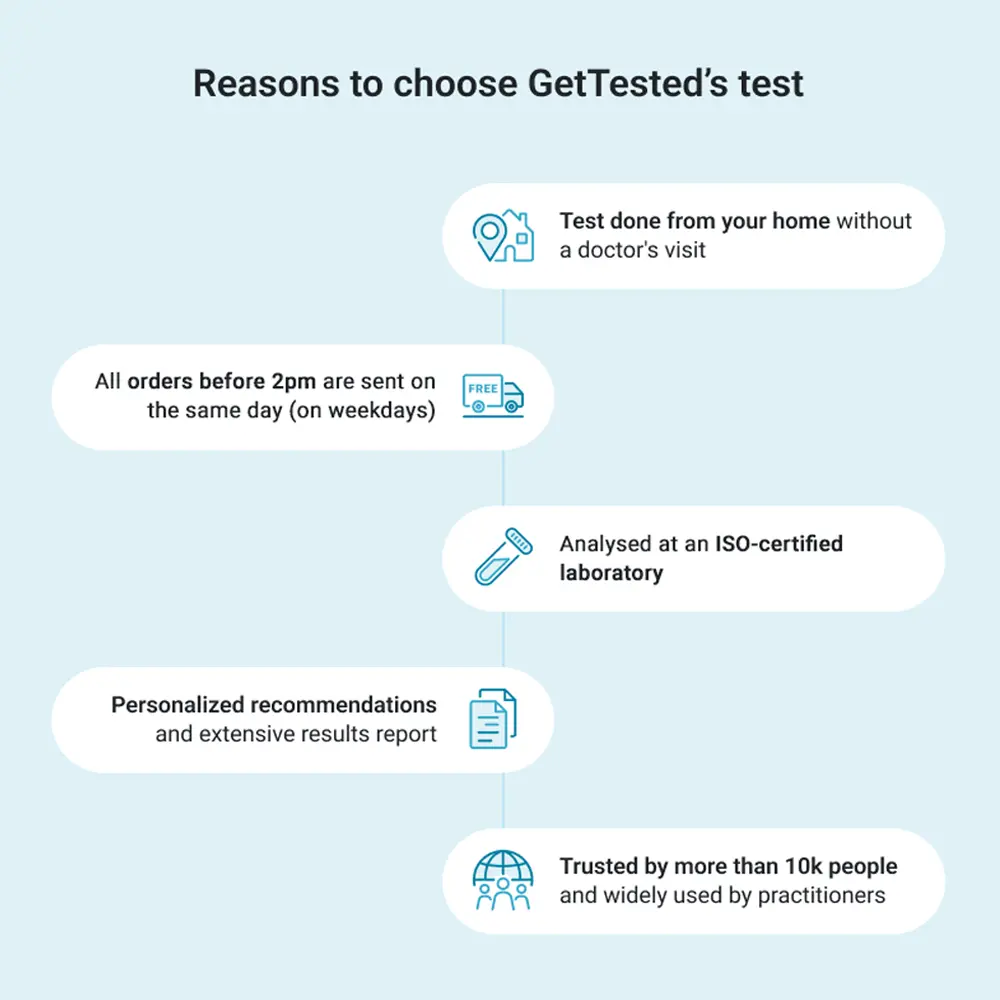
 Easy to Use
 Fast Delivery