
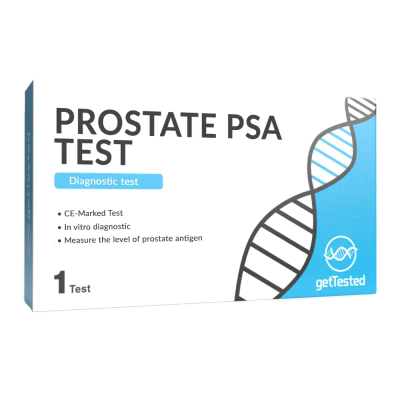
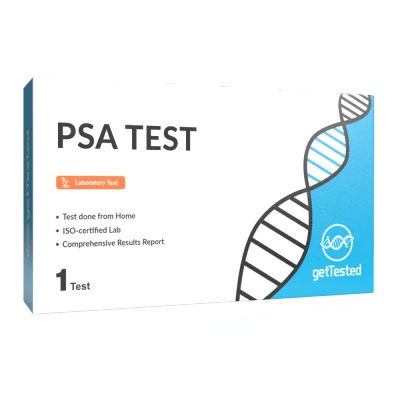
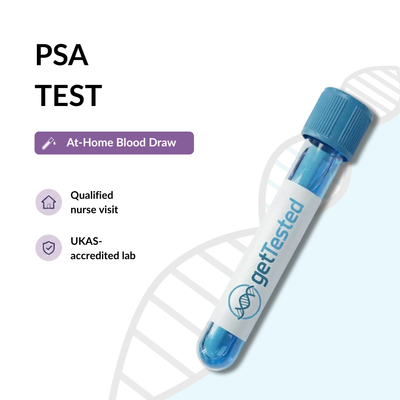
Finger-prick self test
Quick PSA reading at home
Do the test yourself and read the result at home within minutes.
15% off every test below with code BLACK15 – except deals
Looking for a cancer marker test? It's worth knowing that this category currently focuses specifically on prostate health, not a broader panel across cancer types.
Both tests in this range measure PSA (prostate-specific antigen), just at a different level of detail, so the choice comes down to speed versus precision rather than which infection or condition to check for.
• A rapid finger-prick test with results within minutes
• A more detailed lab-analysed blood test
PSA is a protein produced by the prostate gland, and elevated levels can be linked to a range of causes, from ageing and prostate enlargement to inflammation, not automatically cancer itself. For a fast first check, our PSA Rapid Test gives a result from a simple finger-prick sample in minutes.
Because PSA can rise for several reasons, a single elevated reading isn't a diagnosis on its own, it's a prompt to discuss further with a healthcare professional rather than a cause for alarm. For men over 50, or earlier with a family history of prostate issues, a yearly check is a sensible habit rather than a one-off test.
For ongoing monitoring, the PSA Test (Lab) is analysed by an accredited laboratory and can be repeated periodically. Tracking PSA over time gives you and your doctor more context than a one-off reading. That's what a cancer marker test in this range is designed to support: an accessible first step, not a final answer.
All three tests measure PSA. The difference is how the sample is taken and read. Choose the rapid test for a quick reading at home, the finger-prick lab test for a result measured by a laboratory, or a nurse visit if you would rather not take the sample yourself.
Finger-prick self test
Do the test yourself and read the result at home within minutes.
Post your sample
Collect a small blood sample at home and post it to a laboratory.
No kit to collect
A qualified nurse visits to take your blood sample for lab analysis.
PSA is a protein made by the prostate, and some is normally found in the blood. A level that is higher than expected can be caused by things such as an enlarged prostate or a urine infection. The NHS is clear that a high PSA does not mean you have cancer, so your result simply shows where your level sits against the reference range.
Men and anyone with a prostate can check their PSA level at home, without booking a clinic appointment. Some people test once to see where they stand, while others measure it again over time to track any change. Using the same type of test each time makes results easier to compare.
The tests on this page do not check for cancer. They measure PSA, a protein made by the prostate. PSA can be raised by an enlarged prostate, a urine infection and other things, and the NHS says a high PSA does not mean you have cancer. Your result shows where your PSA level sits against the reference range.
All three measure PSA. The rapid test gives a reading at home within minutes. The PSA lab test uses a finger-prick sample you post to a laboratory. The nurse-visit test suits people who would rather have a qualified nurse take a blood sample at home. If you plan to check PSA over time, use the same type of test each time.
Men and anyone with a prostate can use our PSA tests. You can check your level at home without booking a clinic appointment, either once to see where you stand or at regular intervals to track any change over time.
The NHS advises that for 48 hours before a PSA test you avoid ejaculating, anal sex, vigorous exercise and cycling, as these can raise PSA. A urine infection can also affect the result. You can eat and drink as usual. Follow any instructions that come with your test as well.
A home PSA test is a screening tool, not a diagnosis. A high PSA does not mean you have cancer. If your level is outside the reference range, follow it up with your GP.
Order before 2pm Monday to Friday and your kit is dispatched the same day, with UPS Pre-12pm Next Working Day Delivery available. Weekend delivery with DPD Express and collection from an InPost locker are also available at checkout. For the nurse-visit PSA test, no kit is posted: a qualified nurse visits to take the sample, and booking details follow after ordering.