

Blood markers
Biological age markers
DNA methylation, telomere length and inflammation markers from a finger prick.
15% off every test below with code BLACK15 – except deals
Curious about how well your body is actually ageing rather than just how old you are? A longevity test looks at biological markers tied to cellular energy and metabolic function, giving you a more detailed picture than a standard check-up ever could.
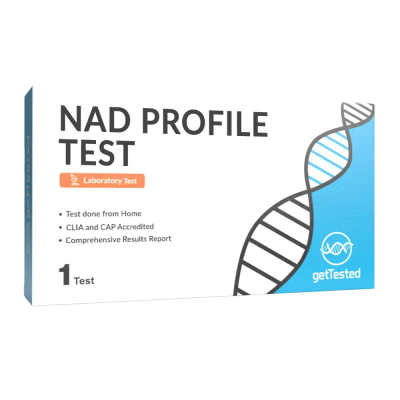
This is a smaller, more specialised range than most categories. The NAD Profile Test looks at cellular energy production and repair, while the Biological Age Test measures telomere length alongside other markers to give a broader view of how your body is functioning relative to your actual age, so the two answer genuinely different questions rather than overlapping.
Results give you a genetic and metabolic snapshot to discuss with a healthcare professional or use to guide lifestyle decisions around diet, sleep or exercise. This category tends to suit:
• Anyone already tracking other health markers who wants a more advanced view
• Those proactive about healthy ageing rather than reactive to symptoms
• People wanting a baseline to compare against in future years
Either way, a one-off sample gives you a result you can refer back to later rather than a snapshot that means nothing on its own. That's the value of a longevity test: concrete data rather than a guess about how well your body is coping with age.
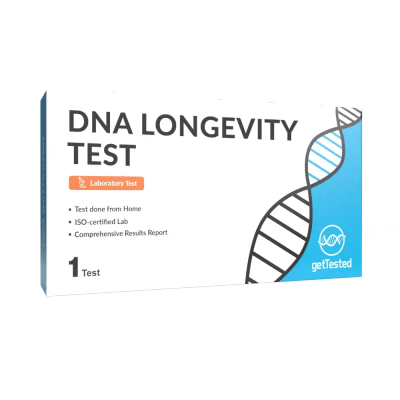
Each test looks at something different. The Biological Age Test measures blood markers that can change over time. The NAD Profile Test focuses on markers of cellular energy. The DNA Longevity Test looks at inherited gene variants, which stay the same throughout life.
Blood markers
DNA methylation, telomere length and inflammation markers from a finger prick.
Cellular energy
Measure NAD and related markers involved in cellular energy.
Saliva DNA test
Gene variants linked to cell repair, inflammation and metabolism.
Longevity testing is about measuring, not predicting. These tests show where certain markers sit today, such as DNA methylation or NAD levels, which gives you a baseline to compare against if you choose to test again later.
Blood-based markers can change over time, while your inherited genes stay the same. Combining a blood-based test with a DNA test gives two different views. If you want to look at your genes in other areas, see our wider range of DNA tests.
Choose the Biological Age Test if you want blood-based markers such as DNA methylation and telomere length. Choose the NAD Profile Test if cellular energy markers interest you most. The DNA Longevity Test suits you if you want to look at inherited gene variants. Some people combine a blood test with the DNA test.
The Biological Age Test gives an estimate based on DNA methylation, telomere length and other markers. It describes what is measured and does not predict how long you will live. Research on these measures is still developing, and experts advise against using them alone to make personal health decisions.
The NAD Profile Test measures NAD (nicotinamide adenine dinucleotide) and its key metabolites from a dried blood spot sample. NAD is involved in energy metabolism and normal cellular function. The test shows your levels; it does not measure ageing directly.
No. A blood test such as the Biological Age Test measures markers that can change over time. The DNA Longevity Test uses a saliva sample to look at inherited gene variants linked to cell repair, inflammation and metabolism. Genes are only one part of the picture, alongside lifestyle and environment.
Home longevity tests are screening tools, not a diagnosis. If a result is outside the reference range, follow it up with your GP and take your report with you.
Order before 2pm Monday to Friday and your kit is dispatched the same day, with UPS Pre-12pm Next Working Day Delivery available. Weekend delivery with DPD Express and collection from an InPost locker are also available at checkout.