Allergy Test - Milk & Egg
GetTested’s Milk & Egg Allergy Test is an at-home blood lab test designed to identify whether you have an IgE-mediated allergy to cow’s milk proteins or egg white. By analyzing your body’s immune response, the test helps determine if your symptoms are linked to a true allergy, rather than conditions such as lactose intolerance or food sensitivity.
The test is performed using a simple finger-prick blood sample at home and provides clear, separate results for milk and egg, helping you better understand potential triggers behind symptoms such as digestive issues, skin reactions, or respiratory symptoms.
About Allergy Test - Milk & Egg
Milk & Egg Allergy and Immune Response
This test analyzes your body’s immune reaction to milk and egg proteins, helping you identify whether your symptoms are caused by a true allergy. By understanding your IgE response, you can better manage your diet and avoid potential triggers.
What This Test Measures
Biomarkers
2 biomarkers
Sample
Blood
Results in
10-15 business days
Format
Lab Test
How It Works and Important to Know
Order Your Kit: Purchase your test online.
Collect Your Sample: Take a finger-prick blood sample at home and place a few drops on the collection card.
Send It Back: Mail your sample to the laboratory.
Receive Results: Access your digital results once analysis is complete.
This method is quick and easy to perform.
For the most accurate results, it is recommended that you have had recent exposure within the last 3 months to milk and/or egg, as this ensures your immune response is detectable.
Have Questions?
Chat with our AI assistant for instant answers about this product, usage, or recommendations.
Over 500,000 Customers
4.6 out of 5 based on 5 reviews on this product
£41.99
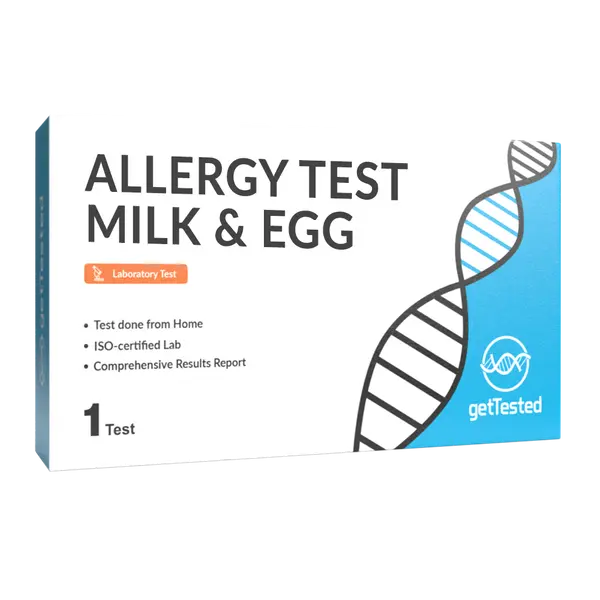
Allergy Test - Milk & Egg
GetTested’s Milk & Egg Allergy Test is an at-home blood lab test designed to identify whether you have an IgE-mediated allergy to cow’s milk proteins or egg white. By analyzing your body’s immune response, the test helps determine if your symptoms are linked to a true allergy, rather than conditions such as lactose intolerance or food sensitivity.
The test is performed using a simple finger-prick blood sample at home and provides clear, separate results for milk and egg, helping you better understand potential triggers behind symptoms such as digestive issues, skin reactions, or respiratory symptoms.
Milk & Egg Allergy and Immune Response
This test analyzes your body’s immune reaction to milk and egg proteins, helping you identify whether your symptoms are caused by a true allergy. By understanding your IgE response, you can better manage your diet and avoid potential triggers.
What This Test Measures
Biomarkers
2 biomarkers
Sample
Blood
Results in
10-15 business days
Format
Lab Test
How It Works and Important to Know
Order Your Kit: Purchase your test online.
Collect Your Sample: Take a finger-prick blood sample at home and place a few drops on the collection card.
Send It Back: Mail your sample to the laboratory.
Receive Results: Access your digital results once analysis is complete.
This method is quick and easy to perform.
For the most accurate results, it is recommended that you have had recent exposure within the last 3 months to milk and/or egg, as this ensures your immune response is detectable.
How does it work? / When do I get my results?
2. Perform the test.
3. Send a sample at the beginning of the week (to avoid delays).
4. Results digitally in 10–15 business days.
Do I need to eat milk or eggs before the test?
Does this test include both egg white and egg yolk?
Allergy Test - Milk & Egg price and what’s included
Price history
Current price
£41.99
Starting price
£41.99
Total change
£0.00
No. of changes
0
Stable Pricing
No hidden fees. The price you see is the price you pay.
Price Lock Guarantee
Your price won't change after purchase.
Have Questions About This Product?
Chat with our AI assistant for instant answers about this product, usage guidelines, or personalized recommendations.
Over 500,000 Customers
4.6 out of 5 based on 5 reviews on this product