Diabetes Test (ketones & glucose)
GetTested’s Diabetes Test (Glucose & Ketone) is a simple, at-home rapid test that helps you quickly assess your glucose and ketone levels in urine. This test provides immediate feedback, helping you monitor your diabetes risk and manage your health.
By measuring glucose and ketone levels, the test can provide insights into your blood sugar control and possible ketosis, making it an essential tool for individuals looking to manage their health proactively.
£12.99
£18.99
Pre-2pm delivery Tuesday, 13 October. Ships Monday.
Discreet, tracked delivery
About Diabetes Test (ketones & glucose)
Monitor Glucose and Ketone Levels
This test detects glucose and ketones in your urine, providing quick insights into your diabetes risk. It's easy to perform and offers immediate results, making it an ideal tool for those managing their blood sugar levels.
What This Test Measures
Biomarkers
2 biomarkers
Sample
Urine
Results in
1 minute
Format
Rapid Test
How It Works
Order Your Kit: Purchase your test online.
Collect Your Sample: Collect your urine sample.
Compare with Chart: Compare your test strip result with the color chart provided in the kit.
Results in Minutes: Get results instantly and take the next steps in your health management.
Sample Collection
The test is performed using a urine sample collected easily at home. Simply dip the test strip into the sample and compare the color change with the chart for immediate results.
Have Questions?
Chat with our AI assistant for instant answers about this product, usage, or recommendations.
Over 500,000 Customers
4.8 out of 5 based on 5 reviews on this product
£12.99
£18.99
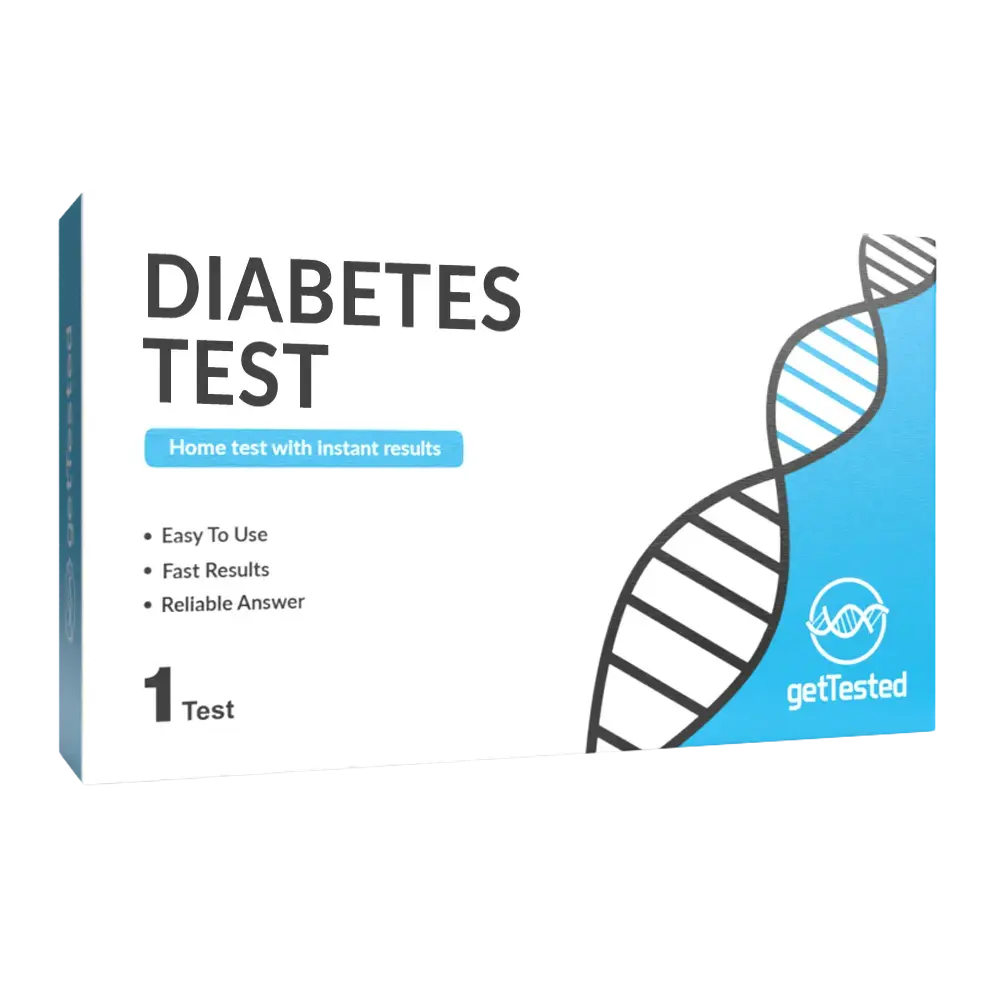
Diabetes Test (ketones & glucose)
GetTested’s Diabetes Test (Glucose & Ketone) is a simple, at-home rapid test that helps you quickly assess your glucose and ketone levels in urine. This test provides immediate feedback, helping you monitor your diabetes risk and manage your health.
By measuring glucose and ketone levels, the test can provide insights into your blood sugar control and possible ketosis, making it an essential tool for individuals looking to manage their health proactively.
£12.99
£18.99
Pre-2pm delivery Tuesday, 13 October. Ships Monday.
Discreet, tracked delivery
Monitor Glucose and Ketone Levels
This test detects glucose and ketones in your urine, providing quick insights into your diabetes risk. It's easy to perform and offers immediate results, making it an ideal tool for those managing their blood sugar levels.
What This Test Measures
Biomarkers
2 biomarkers
Sample
Urine
Results in
1 minute
Format
Rapid Test
How It Works
Order Your Kit: Purchase your test online.
Collect Your Sample: Collect your urine sample.
Compare with Chart: Compare your test strip result with the color chart provided in the kit.
Results in Minutes: Get results instantly and take the next steps in your health management.
Sample Collection
The test is performed using a urine sample collected easily at home. Simply dip the test strip into the sample and compare the color change with the chart for immediate results.
Why is it important to measure ketones?
Diabetes Test (ketones & glucose) price and what’s included
Price history
Current price
£12.99
Starting price
£12.99
Total change
£0.00
No. of changes
0
Stable Pricing
No hidden fees. The price you see is the price you pay.
Price Lock Guarantee
Your price won't change after purchase.
Have Questions About This Product?
Chat with our AI assistant for instant answers about this product, usage guidelines, or personalized recommendations.
Over 500,000 Customers
4.8 out of 5 based on 5 reviews on this product