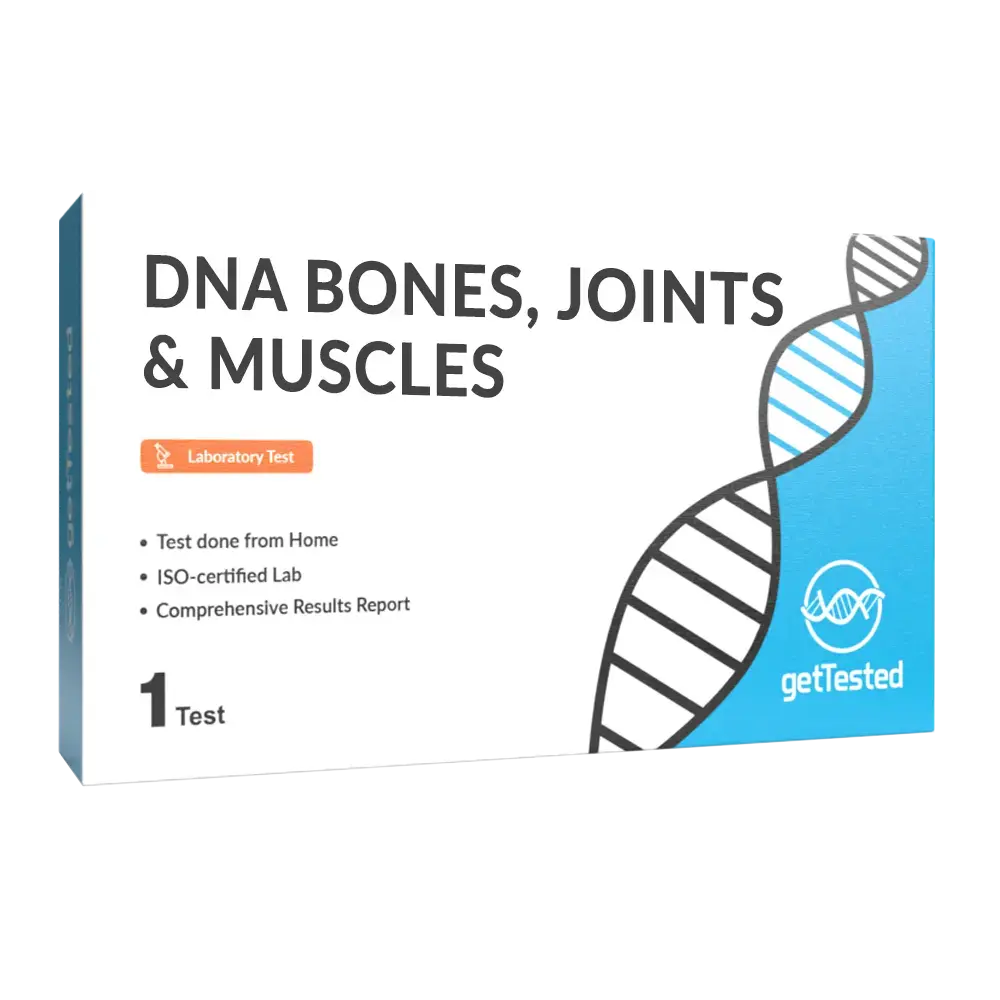
DNA Bones Joints & Muscles
Explore genetic factors linked to bone health, joints, muscles, recovery and injury risk with an at-home DNA saliva test and personalised insights.
Product details: GBP 1999 — OutOfStock — SKU DNAJM — GetTested
About this test – DNA Bones Joints & Muscles
Key Benefits
41 Genetic Biomarkers: Covers bone health, joints, muscles and injury risk
Relevant for Active Lifestyles: Useful for people who train, exercise or want to understand how their body may respond to physical load
Personalised Recommendations: Includes lifestyle, nutrition and training-related guidance based on your DNA profile
Broad DNA Analysis: Analyses approximately 200 genes and up to 83 million genetic variants
Simple At-Home Collection: Collect a saliva sample at home and send it to the laboratory
What This Test Measures
The test provides 41 genetic biomarkers across four main areas:
Bone Health and Skeleton
Includes genetic biomarkers related to bone density, bone strength, calcium, vitamin D, vitamin K and skeletal health. These insights may help identify genetic patterns linked to mineralisation, nutrient needs and bone-related risks.
Joints and Mobility
Focuses on genetic biomarkers related to joint health, stiffness, osteoarthritis-related patterns and areas such as the back, hips, knees, jaw, shoulders and neck. This may provide useful context for mobility and load-related concerns.
Muscles and Recovery
Includes biomarkers related to muscle mass, strength, endurance, creatine, recovery, muscle soreness, cramps and ACTN3-related power response. These insights may help you understand genetic tendencies linked to power, endurance and muscle recovery.
Injury Risk and Physical Load
Covers genetic predispositions related to tendon injuries, knee injuries, Achilles tendon problems, disc-related concerns, fractures, hip fracture and rotator cuff injury. The test does not diagnose an injury, but highlights genetic risk patterns that may be relevant for prevention.
How It Works
1. Order Your Test
Order DNA Bones, Joints & Muscles online.
2. Collect Your Saliva Sample
Collect a saliva sample at home using the included test kit.
3. Send It to the Laboratory
Return your sample using the included materials.
4. Receive Your DNA Report
Access your digital report with genetic biomarkers and personalised recommendations.
Saliva Sample Collection
The test uses a simple saliva sample collected at home. Collect your sample in the provided tube and send it to the laboratory according to the included instructions.

ISO-Certified Laboratory and Analysis
Your sample is analysed at an ISO-certified laboratory using DNA technology based on the Illumina GSA Microarray, which is used to analyse selected genetic variants.
Biomarkers included – DNA Bones Joints & Muscles
- Bone Infection / Osteomyelitis: Bone Health and Skeleton — Bone infection, or osteomyelitis, is a serious condition that requires prompt diagnosis and treatment. Biomarkers for bone infection help identify the presence of inflammation and infection within the bone tissue, which can be caused by bacteria, fungi, or other microorganisms. Early detection is crucial to prevent severe bone damage and complications.
- Calcium: Bone Health and Skeleton — Calcium is an essential mineral needed for bone and teeth structure, muscle contraction, nerve signaling, blood clotting, and many enzyme-driven processes. Most of the body’s calcium is stored in bones and teeth, while a small amount circulates in the blood and is tightly regulated. Abnormal calcium levels can be associated with a range of issues, including bone turnover changes, parathyroid or vi
- Bone Spurs: Bone Health and Skeleton — Bone spurs, also known as osteophytes, are bony outgrowths that develop along the edges of bones. They are a common finding and often form in response to wear and tear on joints, inflammation, or injury. While not a disease themselves, their presence can indicate underlying conditions like osteoarthritis and may cause pain or limit movement.
- Osteoporosis: Bone Health and Skeleton — Osteoporosis is not a single biomarker but a condition characterized by weakened bones, making them more susceptible to fractures. It's important to identify and manage osteoporosis to prevent serious injuries and maintain mobility. Diagnosis often involves bone density scans, but certain blood tests can help assess risk factors and monitor treatment.
- Bone Cancer: Bone Health and Skeleton — Bone cancer is not a single biomarker but rather a group of cancers originating in bone tissue. Detecting specific markers, such as certain proteins or genetic mutations, can help diagnose and monitor bone cancers. Early and accurate identification is crucial for effective treatment and improving patient outcomes.
- Vitamin D: Bone Health and Skeleton — Vitamin D is a fat-soluble vitamin crucial for calcium absorption and bone health, playing a key role in phosphorus metabolism and immune system function. Its importance extends to muscle function, nerve signaling, and reducing inflammation. Maintaining adequate vitamin D levels is vital for overall well-being and disease prevention.
- Vitamin K: Bone Health and Skeleton — Vitamin K is a fat-soluble vitamin crucial for blood clotting and bone health. It plays a vital role in the synthesis of proteins required for blood coagulation and helps in the metabolism of calcium, which is essential for strong bones. Levels are often checked to assess risk for bleeding disorders or bone fragility.
- Shoulder & Neck Pain: Joints and Mobility — Shoulder & Neck Pain is not a specific biomarker but rather a symptom or a collection of symptoms that can indicate underlying health issues. It's important because persistent or severe pain in these areas can significantly impact quality of life and may signal problems ranging from muscle strain and poor posture to more serious conditions like arthritis, nerve compression, or disc degeneration.
- Hip Pain: Joints and Mobility — Hip pain is a subjective symptom experienced in or around the hip joint, indicating potential underlying issues such as osteoarthritis, bursitis, or injury. It is important because persistent or severe hip pain can significantly impact mobility, quality of life, and may signal a condition requiring medical intervention.
- Gout: Joints and Mobility — Gout is a type of inflammatory arthritis characterized by sudden, severe attacks of pain, swelling, redness, and tenderness in joints, often the big toe. It is caused by a buildup of uric acid in the blood, which forms needle-like crystals in the joints. Monitoring uric acid levels is crucial for diagnosing and managing gout.
- Carpal Tunnel Syndrome: Joints and Mobility — Carpal Tunnel Syndrome is a condition characterized by compression of the median nerve as it passes through the carpal tunnel in the wrist. While not a single biomarker in the traditional sense, diagnostic tests for Carpal Tunnel Syndrome often assess nerve conduction velocity and electromyography (EMG) results. These tests indirectly indicate the extent of nerve damage and dysfunction, which is c
- Joint Pain / Osteoarthritis: Joints and Mobility — Joint pain and osteoarthritis are not single biomarkers but rather clinical indicators and a diagnosis reflecting the degeneration of cartilage in joints. Their presence is crucial for identifying the extent of joint damage, guiding treatment decisions, and monitoring disease progression.
- Rheumatoid Arthritis: Joints and Mobility — Rheumatoid Factor (RF) is an antibody found in the blood of many individuals with rheumatoid arthritis (RA), an autoimmune disease. While not exclusive to RA, its presence, especially when elevated, can be a significant indicator, aiding in the diagnosis and assessment of disease activity. Monitoring RF levels can also help track the effectiveness of treatment over time.
- Knee Pain: Joints and Mobility — Knee pain is a subjective symptom that indicates potential damage or inflammation in the knee joint. It is an important indicator as it can signal underlying conditions ranging from minor sprains to significant osteoarthritis or injuries, prompting further medical investigation.
- Back Pain: Joints and Mobility — Back pain is not a single biomarker but rather a symptom or a complex clinical presentation indicating an underlying issue affecting the spine, muscles, nerves, or surrounding tissues. Its presence is significant as it can range from mild discomfort to severe, debilitating pain, impacting quality of life and mobility, and often necessitating medical investigation to identify the cause.
- Jaw Disorders / TMJ: Joints and Mobility — Jaw disorders, often referred to as Temporomandibular Joint (TMJ) disorders, encompass a range of conditions affecting the jaw joint and the muscles controlling jaw movement. These conditions can cause pain, clicking, popping, and difficulty with chewing or opening the mouth widely, impacting quality of life.
- Strength: Muscles and Recovery — Muscle strength refers to the maximum force a muscle or muscle group can generate in a single effort. It is crucial for maintaining mobility, performing daily activities, preventing falls, and overall physical function throughout life.
- Creatine Kinase: Muscles and Recovery — Creatine Kinase (CK) is an enzyme present in the heart, brain, skeletal muscles, and other tissues. Elevated CK levels in the blood indicate muscle damage, as the enzyme is released when muscle cells are injured. There are different forms of CK, including CK-MM found in skeletal muscle, CK-MB mainly in the heart, and CK-BB typically in the brain. Measuring CK levels is valuable for diagnosing and
- Muscle Cramps: Muscles and Recovery — Muscle cramps are involuntary, painful contractions of a muscle or group of muscles. They can be a symptom of various underlying conditions, including electrolyte imbalances, dehydration, nerve compression, or certain medications, and their occurrence can indicate a potential health issue.
- Muscle Soreness: Muscles and Recovery — Muscle soreness, often experienced as delayed onset muscle soreness (DOMS), is a subjective sensation of pain and stiffness in muscles after unaccustomed or strenuous exercise. It's important as it can indicate muscle damage and the subsequent repair process, influencing training intensity and recovery strategies.
- Creatine: Muscles and Recovery — Creatine is a naturally occurring compound found primarily in muscle cells, playing a vital role in energy production for muscle contractions. Elevated levels in the blood can indicate muscle damage or kidney dysfunction, as the kidneys are responsible for filtering excess creatine from the body.
- Muscle Loss / Sarcopenia: Muscles and Recovery — Muscle loss, often referred to as sarcopenia, is a decline in muscle mass and strength that naturally occurs with aging. It's an important biomarker because significant muscle loss can impair mobility, increase the risk of falls and fractures, and negatively impact overall health and metabolic function.
- Muscle Recovery: Muscles and Recovery — Muscle recovery refers to the biochemical processes that repair and rebuild muscle tissue after exercise or injury. Monitoring these markers helps assess the efficiency of recovery, prevent overtraining, and optimize performance by understanding when muscles are ready for subsequent exertion.
- Endurance: Muscles and Recovery — Endurance is a complex physiological trait that reflects the body's capacity to sustain prolonged physical activity. It is influenced by a combination of factors including cardiovascular efficiency, muscular strength, energy metabolism, and psychological resilience. Assessing endurance is important for evaluating athletic performance, general fitness levels, and recovery from illness or injury.
- Muscle Mass: Muscles and Recovery — Muscle mass refers to the total amount of muscle tissue in the body, which is crucial for strength, mobility, and metabolic health. Maintaining adequate muscle mass is important for overall function, preventing injuries, and supporting a healthy metabolism throughout life.
- ACTN3: Muscles and Recovery — ACTN3 is a gene that encodes the protein Alpha-actinin-3, which is predominantly found in fast-twitch muscle fibers. These fibers are essential for producing rapid and powerful muscle contractions, key to explosive athletic performance. Variations in the ACTN3 gene, especially the R577X polymorphism, are associated with differences in sprinting ability and endurance, making this gene important in
- Muscle Pain: Muscles and Recovery — Muscle pain, also known as myalgia, is a subjective sensation of discomfort or pain within the muscles. It can be an indicator of various conditions ranging from overexertion and minor injuries to systemic diseases like infections or inflammatory disorders. Monitoring muscle pain can help in diagnosing and managing a wide spectrum of health issues.
- Tendon Injury / Tendinopathy: Injury Risk and Physical Load — Tendon Injury/Tendinopathy biomarkers are molecules detected in biological samples that indicate damage or degeneration within tendons. Measuring these can help diagnose tendon issues, assess severity, and monitor healing, which is crucial for effective treatment and recovery.
- Abdominal Hernia: Injury Risk and Physical Load — An abdominal hernia is a condition where an organ or tissue protrudes through a weakness in the abdominal wall. It is important to identify hernias for timely diagnosis and management, as they can lead to complications like strangulation if left untreated.
- Spinal Cord Injury Risk: Injury Risk and Physical Load — Spinal Cord Injury Risk refers to a panel of biomarkers that assess an individual's predisposition to developing spinal cord injuries. These markers can indicate underlying conditions, genetic factors, or physiological vulnerabilities that increase the likelihood of such an injury, allowing for proactive preventative measures.
- Fractures: Injury Risk and Physical Load — Fractures are breaks or cracks in bones, often caused by trauma, but can also be a sign of underlying bone weakness due to conditions like osteoporosis. Detecting and assessing fractures is crucial for proper healing, preventing further injury, and identifying potential bone health issues.
- Low Back Injury: Injury Risk and Physical Load — Low Back Injury is not a single biomarker but rather a clinical diagnosis derived from a combination of patient history, physical examination, and sometimes imaging. It is important because low back pain is a leading cause of disability worldwide, impacting quality of life and economic productivity.
- Rotator Cuff Injury: Injury Risk and Physical Load — A "Rotator Cuff Injury" isn't a single biomarker but rather a clinical diagnosis made through a combination of physical examination, imaging (like MRI or ultrasound), and sometimes by observing the presence of specific proteins released from damaged muscle or tendon tissue. Detecting signs of rotator cuff injury is important for timely intervention, pain management, and restoring shoulder function
- Groin Hernia: Injury Risk and Physical Load — A groin hernia is a medical condition where tissue, such as part of the intestine, protrudes through a weak spot in the abdominal muscles in the groin area. It is important to identify and manage groin hernias as they can lead to complications like strangulation, where blood supply to the protruding tissue is cut off.
- ACL Injury: Injury Risk and Physical Load — An ACL injury refers to damage to the anterior cruciate ligament, a key ligament in the knee that helps stabilize the joint. Detecting an ACL injury is crucial for proper treatment and rehabilitation, as untreated tears can lead to long-term knee instability and osteoarthritis.
- Ankle Injury: Injury Risk and Physical Load — Ankle injury is not a biomarker in the traditional sense, but rather a clinical diagnosis that indicates damage to the ligaments, tendons, bones, or cartilage of the ankle joint. It is important for identifying the need for further diagnostic tests and appropriate treatment to restore function and prevent long-term complications.
- Achilles Tendon Injury: Injury Risk and Physical Load — Achilles tendon injury is not a single biomarker but rather a condition diagnosed through a combination of clinical assessment, imaging, and sometimes the evaluation of certain inflammatory markers. These markers can indicate damage and inflammation within the tendon, guiding diagnosis and treatment of conditions ranging from tendinopathy to complete rupture. Early identification is crucial for ef
- Femoral Hernia: Injury Risk and Physical Load — A femoral hernia is a bulge in the upper thigh, near the groin, caused by tissue protruding through a weak spot in the abdominal wall. This condition is important to identify as it can lead to serious complications like strangulation, where blood supply to the herniated tissue is cut off.
- Herniated Disk: Injury Risk and Physical Load — A herniated disk refers to the displacement of the nucleus pulposus, the soft inner material of an intervertebral disc, through a tear in the annulus fibrosus, the tougher outer layer. This condition can cause significant pain, numbness, and weakness by compressing nearby nerves, and its diagnosis is crucial for guiding appropriate treatment and management strategies.
- Knee Injury: Injury Risk and Physical Load — A 'Knee Injury' biomarker isn't a single substance but rather a broad category of indicators that can suggest damage to the knee joint, including cartilage, ligaments, or bone. Detecting these markers can be crucial for early diagnosis, guiding treatment decisions, and monitoring recovery.
- Hip Fractures: Injury Risk and Physical Load — A hip fracture refers to a break in the upper part of the femur (thigh bone), near the hip joint. Hip fractures are a significant health concern, particularly in older adults, as they are often associated with falls, osteoporosis, and can lead to severe pain, loss of mobility, and increased mortality.
How to prepare – DNA Bones Joints & Muscles
No fasting or physical preparation is required. Avoid eating, drinking, smoking, chewing gum or brushing your teeth immediately before collecting your saliva sample. Because this is a DNA test, your results are not affected by temporary factors such as exercise, diet, sleep or how you feel on the day.
Frequently asked questions – DNA Bones Joints & Muscles
What do genetic biomarkers mean in this test?
Genetic biomarkers are DNA-based traits linked to specific biological functions or predispositions. In this test, they provide insight into areas such as bone health, joints, muscle performance, recovery and injury risk.
Can the test show whether I currently have an injury or disease?
No. This is a genetic predisposition test and does not diagnose current injuries or diseases. It provides information about genetic patterns that may influence certain traits or risks over time.
Is the test relevant if I train a lot?
Yes. The test may be particularly useful if you exercise regularly and want to understand genetic factors related to strength, endurance, muscle recovery, physical load and injury risk.
Can the test help me adapt my training and recovery?
The results may provide useful context for tailoring training, recovery and lifestyle strategies to your genetic profile. Your report also includes personalised recommendations based on the biomarkers analysed.
Does lifestyle affect the result of a DNA test?
No. Your DNA does not change based on your current diet, exercise, sleep or daily routine. Lifestyle can influence how genetic predispositions are expressed, but it does not change the genetic variants measured.
What is the difference between this test and a regular blood test?
A blood test usually measures current biological levels that can change over time, such as vitamins or hormones. A DNA test analyses inherited genetic variants that remain the same throughout life and may provide insight into long-term predispositions.
Customer reviews – DNA Bones Joints & Muscles
4.7/5 (6)
- 5/5 — Fast delivery and the saliva collection was very easy to do at home.
- 5/5 — Really interesting results regarding my bone density markers.
- 4/5 — The results gave me a new perspective on my recovery times. It's a bit of a wait for the lab, but the data is solid.
- 5/5 — Snabba svar och proffsig rapport!
- 5/5 — Väldigt smidigt test att göra hemma och resultaten var tydliga.
- 4/5 — Intressant att se sina genetiska förutsättningar för träning och återhämtning. Det tog dock några veckor att få svaret.