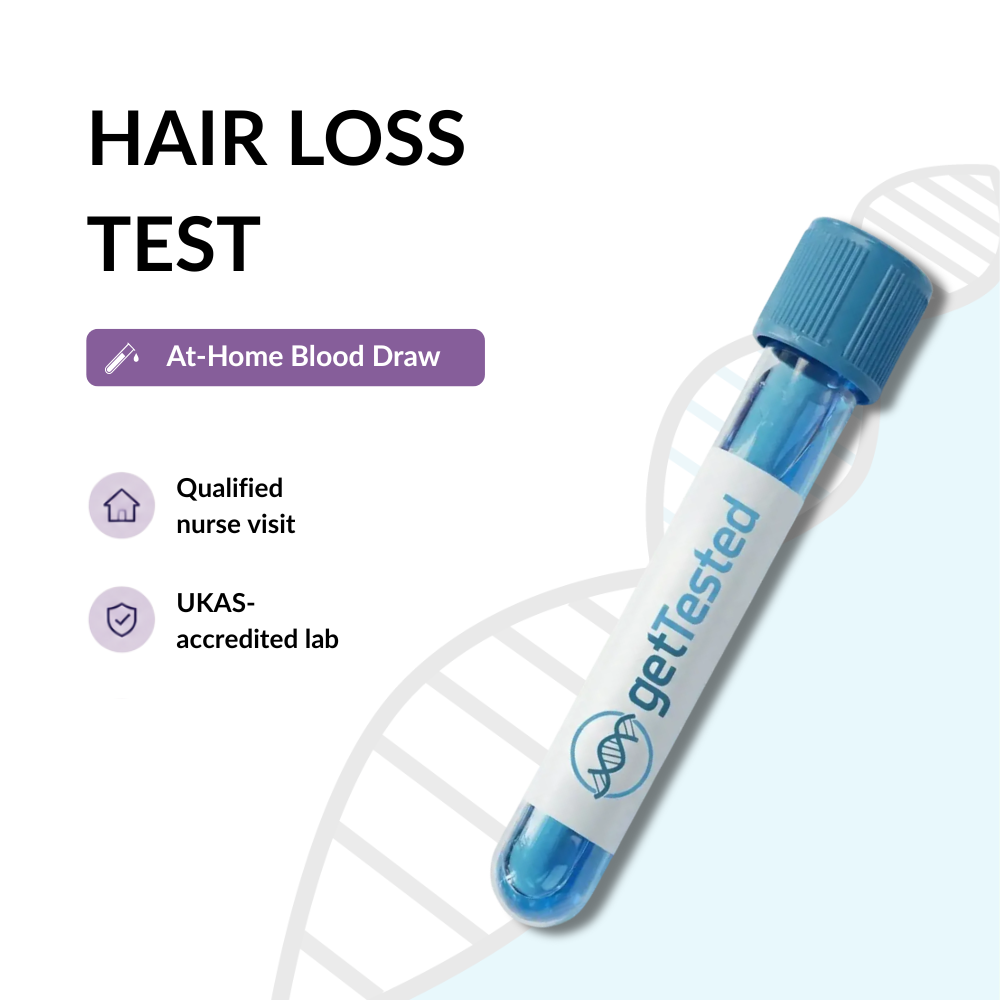
Hair Loss Test
Hair Loss Test with at-home blood collection. Check iron status, thyroid hormones, vitamins, zinc and androgen markers linked to hair thinning and shedding.
Product details: GBP 139 — OutOfStock — SKU IN650 — GetTested
About this test – Hair Loss Test
Key Benefits
Evaluates key biomarkers linked to hair loss, thinning and shedding
Includes iron status, thyroid hormones, vitamins, minerals and androgen markers
Blood sample collected in the comfort of your home
Appointment arranged directly with a healthcare professional
No travel, clinic visits or sample returns by post
Fast, secure online results typically available within 1–3 working days
What This Test Measures
Full Blood Count and Iron Status
Assesses blood health, oxygen transport and iron availability, which can be relevant when investigating increased shedding or reduced hair quality.
Thyroid Function
Looks at thyroid hormones involved in metabolism and the hair growth cycle. Thyroid imbalance may contribute to thinning, shedding or changes in hair texture.
Vitamins and Minerals
Checks nutrient markers that support cell activity, tissue health and normal follicle function.
Androgen and Hormonal Balance
Assesses hormone markers that may influence hair follicles and hormone-related hair changes.
Why Test More Than One Area for Hair Loss?
Hair loss is often not caused by one single factor. Low iron stores, thyroid imbalance, vitamin or mineral deficiencies, androgen activity and changes in general blood health can all affect the hair growth cycle.
This is why a broader blood panel can be useful when hair loss is unexplained, persistent or appears together with symptoms such as tiredness, irregular cycles, acne, changes in weight, low mood or reduced wellbeing. By looking at several key areas together, this test gives a more complete picture of possible internal factors that may be contributing to thinning or increased shedding.
How It Works
Order Your Test
Choose the blood test that best matches your health goals and complete your purchase online.Arrange Your Appointment
Following your order, a healthcare professional will contact you by telephone or email to arrange your appointment. Together, you will schedule a convenient time and location for your blood sample collection.Home Blood Collection
A qualified healthcare professional will visit you to collect your blood sample. They will verify your identity, perform the blood draw and handle the sample collection process.Laboratory Analysis & Results
Your sample is transported for laboratory analysis, and results are securely returned to GetTested. Most results are available within 1–3 working days following analysis.
Laboratory Quality & Accreditation
Your sample is analysed by a UKAS-accredited laboratory operating in accordance with ISO 15189 standards. ISO 15189 is the internationally recognised standard for medical laboratories and covers both quality management and technical competence.
The laboratory follows established procedures for sample handling, analysis and quality control to help ensure accurate and reliable results. All results are securely returned to GetTested and made available through your online account.
Preparation Instructions
Appointment Timing: A morning appointment is recommended where possible, as some hormone markers can vary throughout the day.
Before Testing: Stay well hydrated before your appointment.
Biotin Supplements: Avoid high dose biotin supplements for at least 48 hours before testing, unless advised by a healthcare professional.
Medication and Hormone Treatment: Do not stop or change prescribed medication, thyroid medication, supplements or hormone treatment unless advised by a healthcare professional.
Important
This test is not a substitute for urgent medical care. If you require immediate medical attention, contact your healthcare provider or emergency services.
Biomarkers included – Hair Loss Test
- Haematocrit: Full Blood Count — Haematocrit measures the proportion of red blood cells in your blood. It is a crucial indicator of your body's ability to carry oxygen and can help diagnose conditions like anemia or polycythemia.
- Haemoglobin: Full Blood Count — Haemoglobin is a protein found in red blood cells responsible for carrying oxygen from the lungs to the rest of the body. Its level is a key indicator of a person's oxygen-carrying capacity and is crucial for diagnosing and monitoring conditions like anaemia, which is characterized by a deficiency in red blood cells or haemoglobin.
- Neutrophils: Full Blood Count — Neutrophils are a type of white blood cell and the most abundant type of phagocyte, a cell that engulfs and destroys foreign invaders like bacteria. Elevated neutrophil counts often indicate an acute infection or inflammatory response, making them a key indicator of the body's immediate defense mechanisms.
- Monocytes: Full Blood Count — Monocytes are a type of white blood cell produced in the bone marrow. These cells play a crucial role in the immune system by engulfing pathogens and cellular debris, and they differentiate into macrophages and dendritic cells to further combat infection and regulate immune responses.
- MPV: Full Blood Count — MPV, or Mean Platelet Volume, is a measure of the average size of platelets in a blood sample. Platelets are small blood cells that help with clotting, and their size can offer insights into how they are being produced and functioning. Both very small and very large platelets can be associated with certain medical conditions.
- MCV: Full Blood Count — MCV stands for Mean Corpuscular Volume. It measures the average size of red blood cells in a sample of blood. This biomarker is crucial for diagnosing and classifying different types of anemia, as it helps determine if red blood cells are smaller or larger than normal.
- White Blood Cells: Full Blood Count — The White Cell Count, also known as the leukocyte count, measures the total number of white blood cells (leukocytes) in a sample of blood. White blood cells are a crucial part of the immune system, helping to fight infections and diseases. An abnormal count can indicate infection, inflammation, allergic reactions, or other serious health conditions.
- MCHC: Full Blood Count — MCHC (Mean Corpuscular Hemoglobin Concentration) measures the average concentration of hemoglobin within a single red blood cell. It is a critical marker for diagnosing the cause of anemia, as it indicates whether red blood cells are carrying an appropriate amount of oxygen-binding protein relative to their size.
- RDW: Full Blood Count — RDW, or Red Blood Cell Distribution Width, is a measurement of the variation in size of your red blood cells. A higher RDW indicates that there is a significant difference in the sizes of your red blood cells, which can be an early indicator of various types of anemia and other underlying health conditions.
- Eosinophils: Full Blood Count — Eosinophils are a type of white blood cell that plays a role in the immune response, particularly against parasites and in allergic reactions. Elevated levels can indicate an infection, an allergic condition, or certain other diseases.
- MCH: Full Blood Count — MCH, or Mean Corpuscular Hemoglobin, measures the average amount of hemoglobin within a single red blood cell. Hemoglobin is crucial for carrying oxygen throughout the body, so MCH provides insight into the red blood cells' oxygen-carrying capacity and can help diagnose different types of anemia.
- Platelets: Full Blood Count — Platelets, also known as thrombocytes, are tiny, irregular-shaped cell fragments that play a crucial role in blood clotting. They circulate in the blood and, when an injury occurs, they aggregate at the site to form a plug, preventing excessive bleeding. Their count and function are vital for hemostasis and can indicate various health conditions.
- Red Blood Cells: Full Blood Count — The Red Cell Count, also known as the erythrocyte count, measures the number of red blood cells (erythrocytes) in a given volume of blood. These cells are crucial as they transport oxygen from the lungs to all tissues in the body and carry carbon dioxide back to the lungs for exhalation.
- Lymphocytes: Full Blood Count — Lymphocytes are a type of white blood cell and a crucial component of the immune system. They are responsible for recognizing and fighting off infections, as well as regulating the immune response, and are vital for adaptive immunity.
- Transferrin Saturation: Iron Status — Transferrin saturation is a measure that reflects the percentage of transferrin — a blood protein that transports iron — that is actually bound to iron. It helps assess how effectively iron is being carried and utilized in the body. This marker is useful for identifying iron deficiency or iron overload, and is typically calculated using serum iron and total iron-binding capacity (TIBC). Low levels
- Ferritin: Iron Status — Ferritin is a protein that stores iron inside cells and serves as a key indicator of the body’s iron reserves. Measuring ferritin helps assess iron status: low ferritin is commonly associated with depleted iron stores and iron deficiency. Elevated ferritin can occur with iron overload, but it may also rise in response to inflammation, infection, liver disease, or other chronic conditions because f
- TSH: Thyroid Function — Thyroid-Stimulating Hormone (TSH), also known as thyrotropin, is a hormone produced by the pituitary gland. It plays a crucial role in regulating thyroid function by stimulating the thyroid gland to produce and release thyroid hormones (T3 and T4), which are vital for metabolism, growth, and development. Measuring TSH levels is a primary way to assess thyroid gland activity and diagnose thyroid di
- Thyroid Peroxidase Antibodies: Thyroid Function — Thyroid Peroxidase (TPO) antibodies are proteins produced by the immune system that mistakenly attack the enzyme responsible for synthesizing thyroid hormones. Measuring these antibodies is critical for diagnosing autoimmune thyroid disorders, such as Hashimoto's thyroiditis or Graves' disease, and helps determine the underlying cause of thyroid dysfunction.
- Free T3 (fT3): Thyroid Function — Free triiodothyronine (fT3) is the unbound, biologically active form of the thyroid hormone T3. T3 plays a central role in regulating metabolic rate, energy production, temperature regulation, and many aspects of growth and tissue function. Measuring fT3 reflects the portion of T3 that is available to tissues, independent of variations in thyroid-binding proteins. fT3 is typically interpreted toge
- Free T4 (fT4): Thyroid Function — Free thyroxine (fT4) is the unbound fraction of the thyroid hormone T4 circulating in the blood. Because only the free hormone can enter cells, fT4 reflects the amount of thyroid hormone available to tissues and is a key marker of thyroid function. fT4 is commonly measured to help evaluate and monitor thyroid disorders—levels may be elevated in hyperthyroidism and reduced in hypothyroidism. It is
- Vitamin B12: Vitamins — Vitamin B12 (cobalamin) is a water-soluble vitamin essential for DNA synthesis, red blood cell formation, and neurological function. It's primarily found in animal products, making vegetarians and vegans at higher risk of deficiency. B12 deficiency can lead to pernicious anemia, fatigue, neurological problems (including numbness, tingling, and memory issues), and elevated homocysteine levels, incr
- Folate: Vitamins — Folate (vitamin B9) is a water-soluble vitamin essential for DNA synthesis, cell division, and normal red blood cell formation. It is especially important during pregnancy because adequate folate status supports early fetal development and helps reduce the risk of neural tube defects. Folate also participates in methylation pathways and homocysteine metabolism, where low folate can contribute to e
- 25-hydroxyvitamin D (25-OH D): Vitamins — 25-hydroxyvitamin D (25[OH]D) is the primary circulating form of vitamin D and the most reliable biomarker for assessing vitamin D status. It reflects the combined contribution from dietary intake, supplements, and skin synthesis through sun exposure. This marker is important for monitoring calcium metabolism, bone health, and immune function. Low levels are linked to reduced bone mineralization a
- Zinc: Minerals — Zinc is an essential trace mineral crucial for numerous bodily functions, including immune system function, wound healing, DNA synthesis, and cell division. It plays a vital role in the activity of over 300 enzymes and is essential for growth and development during pregnancy, childhood, and adolescence. Maintaining adequate zinc levels is important for overall health and preventing immune deficien
- Sex Hormone-Binding Globulin (SHBG): Androgens — Sex Hormone-Binding Globulin (SHBG) is a protein produced by the liver that binds to sex hormones, primarily testosterone and estrogen, in the bloodstream. By binding these hormones, SHBG regulates their bioavailability, meaning only the 'free' or unbound hormones can interact with target cells and exert their biological effects. Therefore, SHBG levels are crucial for understanding the true hormon
- Free Androgen Index (FAI): Androgens — The Free Androgen Index (FAI) is a calculated value used to estimate the amount of biologically available (free) testosterone. It is typically derived from total testosterone and sex hormone–binding globulin (SHBG), helping provide context for androgen activity beyond total testosterone alone. FAI is commonly used in the evaluation of androgen-related conditions, particularly in women (for example
- Total Testosterone: Androgens — Total testosterone is a measure of all testosterone circulating in the blood, both bound to proteins and unbound (free). It is the primary male sex hormone and plays a crucial role in the development and maintenance of male reproductive tissues, as well as influencing muscle mass, bone density, and mood.
- Prolactin: Adrenal and Hormonal Support — Prolactin is a hormone primarily produced by the pituitary gland, best known for its role in stimulating milk production (lactation) after childbirth. It's important because abnormal levels can indicate various health issues, including pituitary tumors, infertility, and menstrual irregularities in women, or erectile dysfunction and decreased libido in men.
- DHEA-S: Adrenal and Hormonal Support — DHEA-S is a hormone produced mainly by the adrenal glands and serves as a precursor to sex hormones, including androgens and estrogens. Compared with DHEA, DHEA-S is more stable in the bloodstream and is therefore commonly measured to evaluate adrenal androgen production. Levels typically peak in early adulthood and gradually decline with age. Elevated DHEA-S may be seen in conditions associated w
Frequently asked questions – Hair Loss Test
Why does this test include both nutrients and hormones?
Hair growth is influenced by several systems in the body. Nutrient status, thyroid function, blood health and androgen activity can all affect the hair growth cycle, so testing these areas together gives a broader picture than checking one marker alone.
Can thyroid problems affect hair growth?
Yes, thyroid imbalance can affect the hair growth cycle and may contribute to thinning, shedding or changes in hair texture. This is why the test includes TSH, FT4 and FT3.
Can I reschedule my appointment?
Yes, appointments can be rearranged. Please provide sufficient notice before your scheduled appointment.
What happens if my sample cannot be analysed?
If a sample is unsuitable for analysis, our customer support team will contact you with information about the next steps.
Customer reviews – Hair Loss Test
4.7/5 (3)
- 4/5 — It took a bit longer to book the slot than I expected, but the actual data was very helpful. I finally found out my iron levels were the main issue.
- 5/5 — The phlebotomist who came to my house was great and the results were very detailed.
- 5/5 — Fast results and easy process.