Heart Health Test
GetTested’s Heart Health Test is an at home blood test service for people who want insight into key markers linked to cholesterol, inflammation, blood sugar, cardiovascular health and metabolic wellbeing.
If you want to understand your heart health, monitor cholesterol patterns, check inflammation or keep track of markers that may affect long term cardiovascular risk, this test gives you a focused overview from home.
The test includes 8 biomarkers and calculated health values, covering cholesterol, triglycerides, HDL, LDL, non HDL cholesterol, HbA1c and high sensitivity C reactive protein (hs-CRP).

Included
Nurse home visit
One-time fee — added once regardless of quantity
£128.00
Total with nurse home visit: £188.00
THE PROCESS
From order to results in days
- 01
Order your test
Choose your test and check out online.
- 02
Book your visit
Pick a date and time that suits you.
Confirmation and reminders by SMS.
- 03
Nurse visits your home
A qualified nurse takes your sample at your address.
- 04
Laboratory analysis
Your sample is processed by an accredited lab.
- 05
Receive your results
Securely delivered to your GetTested account.
Typically within 1–3 working days.
About Heart Health Test
Heart Health Check From Home
Heart health is influenced by several connected markers, including cholesterol balance, blood sugar regulation and inflammation. Looking at these areas together can give a clearer picture than checking cholesterol alone.
This test is a strong option if you want to monitor cardiovascular health, understand metabolic patterns or track how lifestyle changes may affect your heart related markers.
Your blood sample is collected at home by a certified nurse and analysed at a UKAS accredited laboratory, with digital results available within 1 to 3 working days.
What This Test Measures
Heart and Lipid Health
Blood Sugar and Metabolic Health
Inflammation and Cardiovascular Context
Biomarkers
8 biomarkers
Sample
Blood
Results in
1-3 business days
Format
Lab Test
How It Works
- 1
Order Your Test
- 2
Arrange Your Appointment
- 3
Blood Sample Collection
- 4
Laboratory Analysis
- 5
Receive Your Results
Have Questions?
Chat with our AI assistant for instant answers about this product, usage, or recommendations.
Over 500,000 Customers
4.7 out of 5 based on 3 reviews on this product
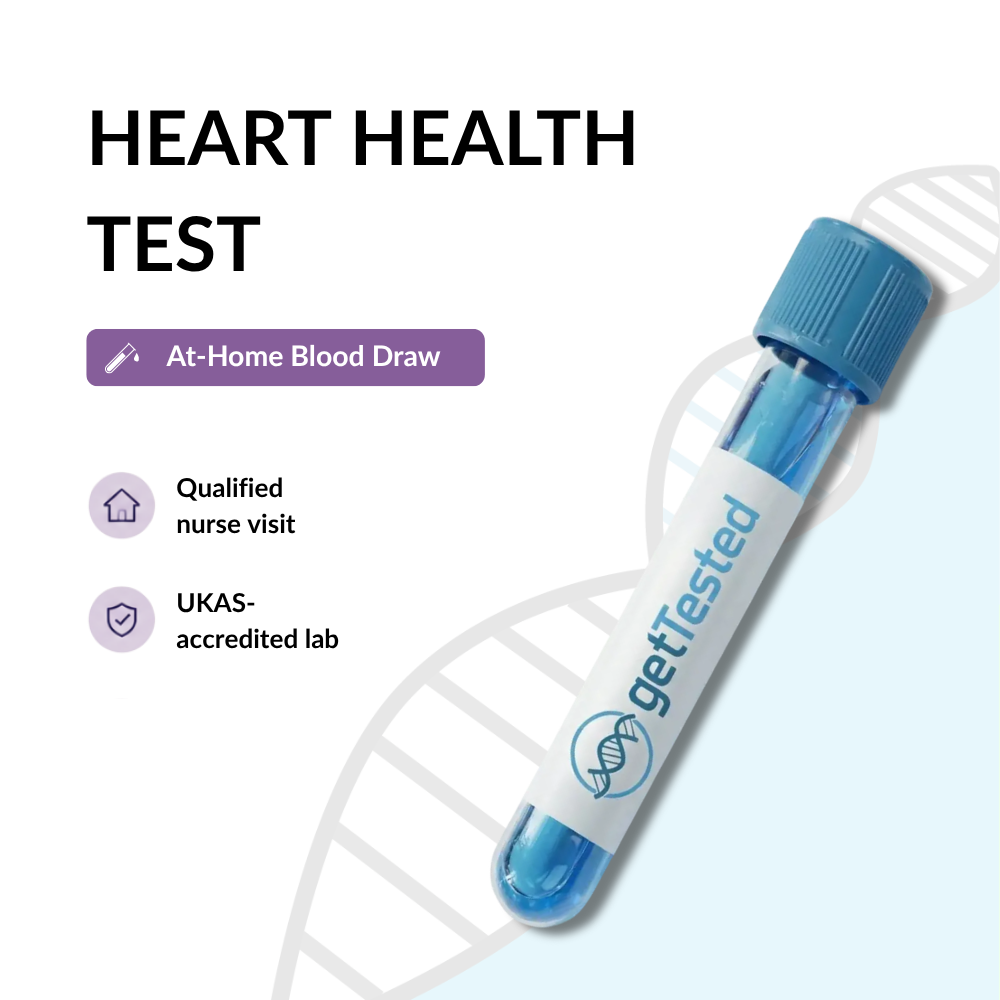
Heart Health Test
GetTested’s Heart Health Test is an at home blood test service for people who want insight into key markers linked to cholesterol, inflammation, blood sugar, cardiovascular health and metabolic wellbeing.
If you want to understand your heart health, monitor cholesterol patterns, check inflammation or keep track of markers that may affect long term cardiovascular risk, this test gives you a focused overview from home.
The test includes 8 biomarkers and calculated health values, covering cholesterol, triglycerides, HDL, LDL, non HDL cholesterol, HbA1c and high sensitivity C reactive protein (hs-CRP).
Included
Nurse home visit
One-time fee — added once regardless of quantity
£128.00
Total with nurse home visit: £188.00
THE PROCESS
From order to results in days
- 01
Order your test
Choose your test and check out online.
- 02
Book your visit
Pick a date and time that suits you.
Confirmation and reminders by SMS.
- 03
Nurse visits your home
A qualified nurse takes your sample at your address.
- 04
Laboratory analysis
Your sample is processed by an accredited lab.
- 05
Receive your results
Securely delivered to your GetTested account.
Typically within 1–3 working days.
Heart Health Check From Home
Heart health is influenced by several connected markers, including cholesterol balance, blood sugar regulation and inflammation. Looking at these areas together can give a clearer picture than checking cholesterol alone.
This test is a strong option if you want to monitor cardiovascular health, understand metabolic patterns or track how lifestyle changes may affect your heart related markers.
Your blood sample is collected at home by a certified nurse and analysed at a UKAS accredited laboratory, with digital results available within 1 to 3 working days.
What This Test Measures
Heart and Lipid Health
Blood Sugar and Metabolic Health
Inflammation and Cardiovascular Context
Biomarkers
8 biomarkers
Sample
Blood
Results in
1-3 business days
Format
Lab Test
How It Works
- 1
Order Your Test
- 2
Arrange Your Appointment
- 3
Blood Sample Collection
- 4
Laboratory Analysis
- 5
Receive Your Results
What does hs CRP add to a heart health test?
Why are HbA1c and cholesterol markers tested together?
Can I reschedule my appointment?
What happens if my sample cannot be analysed?
Heart Health Test price and what’s included
Price history
Current price
£128.00
Starting price
£128.00
Total change
£0.00
No. of changes
0
Stable Pricing
No hidden fees. The price you see is the price you pay.
Price Lock Guarantee
Your price won't change after purchase.
Have Questions About This Product?
Chat with our AI assistant for instant answers about this product, usage guidelines, or personalized recommendations.
Over 500,000 Customers
4.7 out of 5 based on 3 reviews on this product