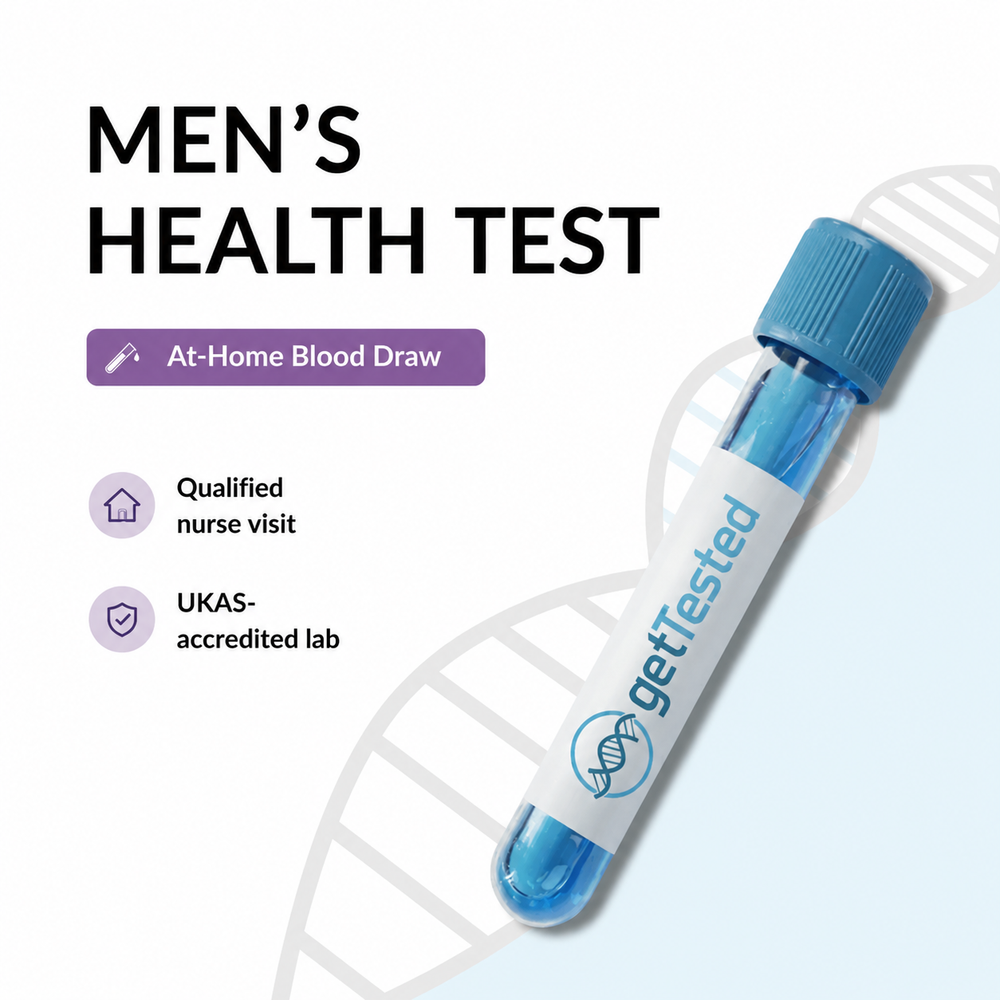
Men’s Health Test
A complete men's health check from home — 47 markers across testosterone, thyroid, iron, vitamins & more. Home visit; UKAS lab, results in 1–3 days.
Product details: GBP 206 — OutOfStock — SKU INU51 — GetTested
About this test – Men’s Health Test
Key Benefits
At Home Blood Collection: Your blood sample is collected in the comfort of your home.
Appointment Arranged Within 48 Hours: A healthcare professional will contact you within 48 hours to arrange your appointment.
No Clinic Visit or Postal Sample Return: No travel, clinic visit or sample return by post is required.
UKAS Accredited Laboratory: Your sample is analysed by a UKAS accredited laboratory.
Fast Online Results: Secure online results are available within 1 to 3 working days.
What This Test Measures
Blood Health and Inflammation
Helps assess blood cell patterns and inflammation related activity, which may be relevant for energy, immune response, fatigue and recovery.
Heart and Lipid Health
Looks at cholesterol and lipid patterns commonly used to understand cardiovascular and metabolic health.
Blood Sugar and Metabolic Health
Provides insight into longer term blood sugar regulation and uric acid, both of which add context around metabolic health.
Iron Status
Helps assess iron availability, transport and storage, which may be relevant for tiredness, low energy and poor recovery.
Testosterone and Thyroid Function
Helps assess testosterone and thyroid markers linked to energy, metabolism, mood, libido, focus, strength and weight related patterns.
Kidney Function
Helps assess kidney filtration and waste removal.
Liver Function and Protein Balance
Provides insight into liver enzyme patterns, bilirubin and blood proteins linked to liver function, nutrition and general balance.
Vitamin and Mineral Status
Includes nutrients linked to energy, immune function, blood health, nervous system function, muscle function and wellbeing.
How It Works
1. Order Your Test
Purchase your test online.
2. Arrange Your Appointment
A healthcare professional will contact you within 48 hours to arrange your at home blood collection appointment.
3. Blood Sample Collection
Your blood sample is collected in the comfort of your home.
4. Laboratory Analysis
Your sample is analysed by a UKAS accredited laboratory.
5. Receive Your Results
Access your secure online results within 1 to 3 working days.
Laboratory Quality and Accreditation
Your sample is analysed by a UKAS accredited laboratory operating in accordance with ISO 15189 standards, the internationally recognised standard for medical laboratories.
The laboratory follows established procedures for sample handling, analysis and quality control to support accurate and reliable results. Your results are securely returned to GetTested and made available through your online account.
Preparation Instructions
Appointment Timing: A morning appointment is recommended where possible, as testosterone and some hormone markers can vary throughout the day.
Fasting: Fasting is not usually required for this test.
Before Testing: Stay well hydrated before your appointment and avoid heavy alcohol intake or unusually intense exercise the day before your blood sample is collected.
Supplements: Avoid taking non essential vitamin or mineral supplements on the morning of your appointment.
Biotin Supplements: Avoid high dose biotin supplements for at least 48 hours before testing, unless advised by a healthcare professional.
Medication and Hormone Treatment: Do not stop or change prescribed medication or hormone treatment unless advised by a healthcare professional.
Important
This test is not a substitute for urgent medical care. If you require immediate medical attention, contact your healthcare provider or emergency services.
Biomarkers included – Men’s Health Test
- Haematocrit: Blood Health and Inflammation — Haematocrit measures the proportion of red blood cells in your blood. It is a crucial indicator of your body's ability to carry oxygen and can help diagnose conditions like anemia or polycythemia.
- Haemoglobin: Blood Health and Inflammation — Haemoglobin is a protein found in red blood cells responsible for carrying oxygen from the lungs to the rest of the body. Its level is a key indicator of a person's oxygen-carrying capacity and is crucial for diagnosing and monitoring conditions like anaemia, which is characterized by a deficiency in red blood cells or haemoglobin.
- Neutrophils: Blood Health and Inflammation — Neutrophils are a type of white blood cell and the most abundant type of phagocyte, a cell that engulfs and destroys foreign invaders like bacteria. Elevated neutrophil counts often indicate an acute infection or inflammatory response, making them a key indicator of the body's immediate defense mechanisms.
- Monocytes: Blood Health and Inflammation — Monocytes are a type of white blood cell produced in the bone marrow. These cells play a crucial role in the immune system by engulfing pathogens and cellular debris, and they differentiate into macrophages and dendritic cells to further combat infection and regulate immune responses.
- hs-CRP (high-sensitivity C-reactive protein): Blood Health and Inflammation — High-sensitivity C-reactive protein (hs-CRP) is a specific type of C-reactive protein test that can detect very low levels of inflammation in the body. While CRP is a general marker of inflammation, hs-CRP is particularly important for assessing the risk of cardiovascular disease, even in apparently healthy individuals. Elevated hs-CRP levels suggest chronic low-grade inflammation, which is a sign
- MPV: Blood Health and Inflammation — MPV, or Mean Platelet Volume, is a measure of the average size of platelets in a blood sample. Platelets are small blood cells that help with clotting, and their size can offer insights into how they are being produced and functioning. Both very small and very large platelets can be associated with certain medical conditions.
- MCV: Blood Health and Inflammation — MCV stands for Mean Corpuscular Volume. It measures the average size of red blood cells in a sample of blood. This biomarker is crucial for diagnosing and classifying different types of anemia, as it helps determine if red blood cells are smaller or larger than normal.
- White Blood Cells: Blood Health and Inflammation — The White Cell Count, also known as the leukocyte count, measures the total number of white blood cells (leukocytes) in a sample of blood. White blood cells are a crucial part of the immune system, helping to fight infections and diseases. An abnormal count can indicate infection, inflammation, allergic reactions, or other serious health conditions.
- MCHC: Blood Health and Inflammation — MCHC (Mean Corpuscular Hemoglobin Concentration) measures the average concentration of hemoglobin within a single red blood cell. It is a critical marker for diagnosing the cause of anemia, as it indicates whether red blood cells are carrying an appropriate amount of oxygen-binding protein relative to their size.
- RDW: Blood Health and Inflammation — RDW, or Red Blood Cell Distribution Width, is a measurement of the variation in size of your red blood cells. A higher RDW indicates that there is a significant difference in the sizes of your red blood cells, which can be an early indicator of various types of anemia and other underlying health conditions.
- Eosinophils: Blood Health and Inflammation — Eosinophils are a type of white blood cell that plays a role in the immune response, particularly against parasites and in allergic reactions. Elevated levels can indicate an infection, an allergic condition, or certain other diseases.
- MCH: Blood Health and Inflammation — MCH, or Mean Corpuscular Hemoglobin, measures the average amount of hemoglobin within a single red blood cell. Hemoglobin is crucial for carrying oxygen throughout the body, so MCH provides insight into the red blood cells' oxygen-carrying capacity and can help diagnose different types of anemia.
- Platelets: Blood Health and Inflammation — Platelets, also known as thrombocytes, are tiny, irregular-shaped cell fragments that play a crucial role in blood clotting. They circulate in the blood and, when an injury occurs, they aggregate at the site to form a plug, preventing excessive bleeding. Their count and function are vital for hemostasis and can indicate various health conditions.
- Red Blood Cells: Blood Health and Inflammation — The Red Cell Count, also known as the erythrocyte count, measures the number of red blood cells (erythrocytes) in a given volume of blood. These cells are crucial as they transport oxygen from the lungs to all tissues in the body and carry carbon dioxide back to the lungs for exhalation.
- Lymphocytes: Blood Health and Inflammation — Lymphocytes are a type of white blood cell and a crucial component of the immune system. They are responsible for recognizing and fighting off infections, as well as regulating the immune response, and are vital for adaptive immunity.
- HDL % of total: Heart and Lipid Health — The HDL percentage of total cholesterol is a ratio that compares 'good' HDL cholesterol to your overall cholesterol count. It is a critical marker for assessing cardiovascular risk, as it indicates how much of your total cholesterol is actively being cleared from the bloodstream rather than accumulating in the arteries.
- HDL Cholesterol: Heart and Lipid Health — HDL cholesterol, often referred to as "good" cholesterol, is a type of lipoprotein that carries cholesterol from other parts of your body back to your liver, where it is broken down and removed from the body. Higher levels of HDL are generally associated with a lower risk of heart disease and stroke, as it helps prevent the buildup of cholesterol in the arteries. Measuring HDL levels is important
- Non-HDL Cholesterol: Heart and Lipid Health — Non HDL cholesterol represents the total amount of cholesterol carried by all cholesterol containing particles except HDL. This includes LDL cholesterol and other particles that may contribute to cholesterol buildup in blood vessels. Because it includes more cholesterol carrying particles than LDL alone, non HDL cholesterol can provide a broader view of lipid related cardiovascular risk. It may be
- LDL Cholesterol: Heart and Lipid Health — LDL cholesterol, often referred to as "bad" cholesterol, is a type of lipoprotein that carries cholesterol to your tissues and arteries. High levels of LDL can lead to the buildup of cholesterol in the arteries (atherosclerosis), increasing the risk of heart disease, heart attack, and stroke. Measuring LDL levels is a key component of assessing cardiovascular health and determining the need for li
- Triglycerides: Heart and Lipid Health — Triglycerides are a type of fat (lipid) found in your blood. Your body uses triglycerides for energy, but high levels can increase your risk of heart disease and other health problems. They are primarily measured to assess cardiovascular health and metabolic risk.
- Total Cholesterol: Heart and Lipid Health — Total cholesterol is a measure of the total amount of cholesterol in your blood, including LDL (bad), HDL (good), and other lipid components. While it provides a general overview of cholesterol levels, it's important to consider the individual levels of LDL and HDL for a more complete assessment of cardiovascular risk. High total cholesterol can increase the risk of heart disease and stroke.
- Uric Acid: Blood Sugar and Metabolic Health — Uric acid is a waste product formed from the breakdown of purines, substances found in certain foods and drinks (like red meat, seafood, and alcohol). It is normally excreted by the kidneys. High uric acid levels (hyperuricemia) can lead to the formation of uric acid crystals in joints, causing gout, a painful form of arthritis. It can also increase the risk of kidney stones. Measuring uric acid l
- HbA1c (Hemoglobin A1c): Blood Sugar and Metabolic Health — HbA1c (Hemoglobin A1c) measures the average blood glucose levels over the past 2-3 months by assessing the percentage of hemoglobin in red blood cells that is coated with sugar. It's a crucial indicator for diagnosing and monitoring diabetes, as persistently high levels denote poor long-term glucose control, increasing the risk of diabetes-related complications. This test provides a more stable an
- Transferrin Saturation: Iron Status — Transferrin saturation is a measure that reflects the percentage of transferrin — a blood protein that transports iron — that is actually bound to iron. It helps assess how effectively iron is being carried and utilized in the body. This marker is useful for identifying iron deficiency or iron overload, and is typically calculated using serum iron and total iron-binding capacity (TIBC). Low levels
- Total Iron Binding Capacity (TIBC): Iron Status — Total Iron Binding Capacity (TIBC) is a blood test that reflects the blood's capacity to bind and transport iron through transferrin — the main iron-carrying protein. It provides an indirect measure of available transferrin and is commonly used alongside other iron tests to help assess iron deficiency, anemia, or iron overload conditions.
- Iron: Iron Status — Iron is an essential mineral critical for oxygen transport, energy production, and cellular function throughout the body. It is a key component of hemoglobin in red blood cells and myoglobin in muscles, enabling oxygen delivery to tissues. Iron also plays vital roles in DNA synthesis, immune function, and cognitive development. Measuring iron levels helps diagnose anemia, assess nutritional status
- Unsaturated Iron Binding Capacity (UIBC): Iron Status — Unsaturated Iron Binding Capacity (UIBC) measures the amount of transferrin that is not saturated with iron, indicating the total amount of iron that could potentially be bound and transported in the blood. A high UIBC suggests the body needs more iron or is unable to properly utilize it, often seen in iron deficiency anemia.
- Ferritin: Iron Status — Ferritin is a protein that stores iron inside cells and serves as a key indicator of the body’s iron reserves. Measuring ferritin helps assess iron status: low ferritin is commonly associated with depleted iron stores and iron deficiency. Elevated ferritin can occur with iron overload, but it may also rise in response to inflammation, infection, liver disease, or other chronic conditions because f
- TSH: Testosterone and Thyroid Function — Thyroid-Stimulating Hormone (TSH), also known as thyrotropin, is a hormone produced by the pituitary gland. It plays a crucial role in regulating thyroid function by stimulating the thyroid gland to produce and release thyroid hormones (T3 and T4), which are vital for metabolism, growth, and development. Measuring TSH levels is a primary way to assess thyroid gland activity and diagnose thyroid di
- Free Triiodothyronine (fT3): Testosterone and Thyroid Function — Free Triiodothyronine (fT3) is the unbound, active form of the thyroid hormone triiodothyronine (T3). It is crucial for regulating metabolism, energy levels, body temperature, and heart function. Measuring fT3 provides a direct assessment of the biologically active thyroid hormone available to tissues, reflecting current thyroid function more accurately than total T3 in many cases.
- Testosterone: Testosterone and Thyroid Function — Testosterone is the primary male sex hormone, although it is also produced in smaller amounts in women. It plays a crucial role in male reproductive development, muscle mass, bone density, and sex drive. In women, testosterone contributes to libido, muscle mass, and bone health. Imbalances can lead to various issues, including decreased libido, erectile dysfunction (in men), fatigue, loss of muscl
- Free T4 (fT4): Testosterone and Thyroid Function — Free thyroxine (fT4) is the unbound fraction of the thyroid hormone T4 circulating in the blood. Because only the free hormone can enter cells, fT4 reflects the amount of thyroid hormone available to tissues and is a key marker of thyroid function. fT4 is commonly measured to help evaluate and monitor thyroid disorders—levels may be elevated in hyperthyroidism and reduced in hypothyroidism. It is
- eGFR: Kidney Function — Estimated Glomerular Filtration Rate (eGFR) is a calculation used to estimate how well the kidneys filter waste products from the blood. It is considered the gold standard for assessing kidney function and is essential for detecting, staging, and monitoring chronic kidney disease.
- Creatinine: Kidney Function — Creatinine is a waste product formed in muscles from the normal breakdown of creatine. It is released into the bloodstream and filtered by the kidneys, then excreted in urine. Because creatinine levels are influenced by how efficiently the kidneys filter blood, it is commonly used to assess kidney function. Elevated creatinine may indicate reduced kidney filtration or kidney disease, while low lev
- Urea: Kidney Function — Urea is a waste product formed in the liver through the breakdown of proteins. After formation, it is transported to the kidneys and eventually excreted in the urine. Measuring urea levels in the blood, often called blood urea nitrogen (BUN), is a common test used to evaluate kidney function. Elevated blood urea levels can indicate impaired kidney function or other issues affecting waste processin
- ALP (Alkaline phosphatase): Liver Function and Protein Balance — Alkaline phosphatase (ALP) is an enzyme present in several tissues throughout the body, especially in the liver, bones, kidneys, and digestive system. ALP plays an important role in breaking down proteins and in dephosphorylation processes. In the liver, it’s associated with bile ducts and is commonly used to help diagnose liver and bone conditions. Elevated ALP levels may indicate bile duct obstr
- Globulin: Liver Function and Protein Balance — Globulin is a group of blood proteins that play important roles in the body, including transporting hormones, lipids, vitamins, and minerals. They are also key components of the immune system, with some globulins functioning as antibodies that help defend against infections. Produced by the liver and immune system, globulin levels can provide insight into immune health, liver function, and nutriti
- Bilirubin: Liver Function and Protein Balance — Bilirubin is a yellow pigment formed when red blood cells are broken down. It is transported to the liver, where it is processed (conjugated) and then excreted through bile. Measuring bilirubin helps assess how well the liver and bile flow pathways are functioning. Elevated levels may be seen with liver or bile duct problems (such as impaired bile flow) or with increased breakdown of red blood cel
- Alanine Aminotransferase (ALT): Liver Function and Protein Balance — Alanine aminotransferase (ALT) is an enzyme found mainly in liver cells. When liver cells are stressed or damaged, ALT can leak into the bloodstream, which is why it’s commonly used as a marker of liver health. Elevated ALT levels may indicate liver inflammation or injury and are seen in a range of conditions affecting the liver. ALT is typically interpreted together with other liver-related marke
- Total Protein: Liver Function and Protein Balance — Total protein is a measure that reflects the combined levels of two major blood proteins — albumin and globulin. Albumin, the most abundant protein in blood plasma, helps maintain oncotic pressure and transports various substances, while globulins play key roles in immune response, blood clotting, and other functions. Total protein levels provide important insights into nutritional status as well
- Albumin: Liver Function and Protein Balance — Albumin is the most abundant protein in blood plasma and is produced by the liver. It helps maintain oncotic (osmotic) pressure, keeping fluid within the bloodstream, and it also transports many substances such as hormones, fatty acids, and certain medications. Measuring albumin can provide useful information about liver synthetic function and overall protein status. Abnormal levels may be seen in
- Aspartate Aminotransferase (AST): Liver Function and Protein Balance — Aspartate aminotransferase (AST) is an enzyme found in several tissues, including the liver, heart, skeletal muscle, kidneys, and red blood cells. It is involved in amino acid metabolism and can be released into the bloodstream when cells in these tissues are stressed or damaged. Elevated AST may indicate liver injury, but because AST is not liver-specific, increased levels can also be seen with m
- Gamma GT: Liver Function and Protein Balance — Gamma-glutamyl transferase (GGT) is an enzyme found primarily in the liver that helps transport molecules across cell membranes and plays a role in glutathione metabolism. It is a highly sensitive marker used to detect liver or bile duct injury and can help distinguish between bone and liver disease when other enzymes are elevated.
- Folate: Vitamin and Mineral Status — Folate (vitamin B9) is a water-soluble vitamin essential for DNA synthesis, cell division, and normal red blood cell formation. It is especially important during pregnancy because adequate folate status supports early fetal development and helps reduce the risk of neural tube defects. Folate also participates in methylation pathways and homocysteine metabolism, where low folate can contribute to e
- Magnesium: Vitamin and Mineral Status — Magnesium is an essential mineral crucial for over 300 biochemical reactions in the body, including muscle and nerve function, blood glucose control, and blood pressure regulation. It also plays a vital role in bone health, DNA, RNA, and protein synthesis. Maintaining optimal magnesium levels is important for overall health and preventing various chronic diseases.
- Vitamin D: Vitamin and Mineral Status — Vitamin D is a fat-soluble vitamin crucial for calcium absorption and bone health, playing a key role in phosphorus metabolism and immune system function. Its importance extends to muscle function, nerve signaling, and reducing inflammation. Maintaining adequate vitamin D levels is vital for overall well-being and disease prevention.
- Active B12: Vitamin and Mineral Status — Active B12, also known as holotranscobalamin, is the specific portion of Vitamin B12 that is actually available for your cells to use. Unlike a standard total B12 test, measuring Active B12 provides a more accurate reflection of your functional vitamin status and can detect a deficiency at an earlier stage.
Frequently asked questions – Men’s Health Test
Can this test help if I have changes in energy, libido or recovery?
Yes. Men’s Health Test includes markers linked to testosterone, thyroid function, iron status, inflammation, vitamins, magnesium, blood sugar and general health, which may provide useful context around energy, libido, recovery and overall wellbeing.
Can this test help if I feel tired or low in energy?
Yes. This test includes markers linked to blood health, iron status, thyroid function, inflammation, vitamin status, magnesium, blood sugar, liver function and kidney function, which may help provide a broader picture when exploring tiredness or low energy.
Can I reschedule my appointment?
Yes, appointments can be rearranged. Please provide sufficient notice before your scheduled appointment.
What happens if my sample cannot be analysed?
If a sample is unsuitable for analysis, our customer support team will contact you with information about the next steps.
Customer reviews – Men’s Health Test
4.7/5 (3)
- 4/5 — Comprehensive results that really helped me understand my energy issues. A bit of a wait for the lab but worth it.
- 5/5 — Really happy with this test, the blood markers covered everything I needed.
- 5/5 — Quick delivery and the kit was straightforward to use at home.