Food Intolerance Test 240 items
GetTested’s Food Intolerance Test 240 items is GetTested’s most comprehensive food intolerance test for people who want the widest possible overview of food related IgG4 responses.
If you struggle with bloating, digestive discomfort, fatigue, skin issues, headaches or symptoms that seem impossible to connect to specific meals, this test helps you stop guessing and investigate a much broader range of foods in one panel.
The test measures IgG4 antibody responses to 240 selected foods, giving you a detailed overview of foods and food groups that may be worth reviewing, adjusting or rotating in your diet.
£277.99
£289.99
Pre-2pm delivery Tuesday, 27 October. Ships Monday.
Discreet, tracked delivery
About Food Intolerance Test 240 items
The Widest Food Intolerance Panel
When symptoms are unclear, testing only a small number of foods may not give the full picture. A broader panel can be especially useful if you eat a varied diet, react unpredictably or feel unsure which foods are actually relevant.
This test provides GetTested’s widest food intolerance overview, helping you compare IgG4 response levels across a large range of selected foods and identify which foods or food groups may be most important to review.
What This Test Measures
Biomarkers
240 biomarkers
Sample
Blood
Results in
10-15 business days
Format
Lab Test
How It Works
- 1
Order Your Kit
- 2
Collect Your Sample
- 3
Send It Back
- 4
Receive Your Results
DBS Blood Sample Collection
The sample is collected using a finger prick dried blood spot sample at home. A few drops of blood are placed onto the collection cards according to the included instructions and sent to the laboratory for analysis.
Food Intolerance Test 240 items requires two dried blood spot collection cards.
Have Questions?
Chat with our AI assistant for instant answers about this product, usage, or recommendations.
Over 500,000 Customers
4.8 out of 5 based on 4 reviews on this product
£277.99
£289.99
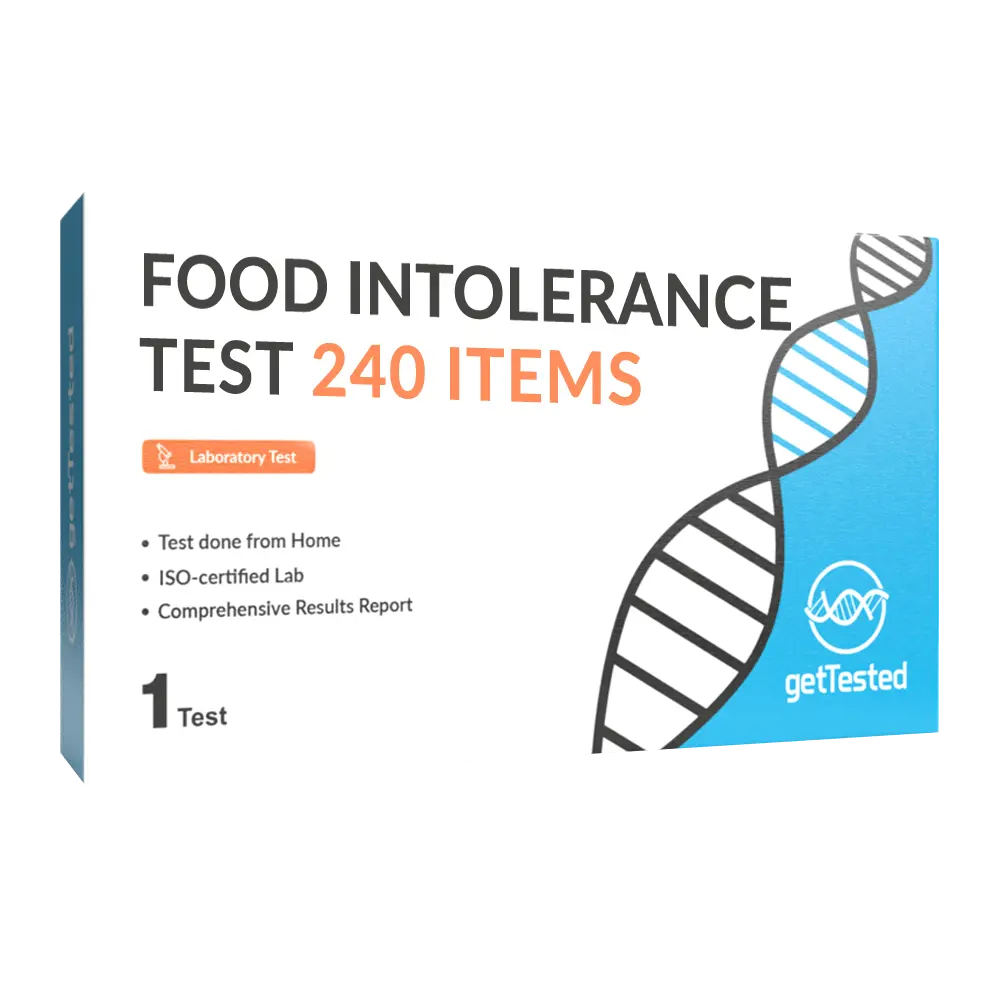
Food Intolerance Test 240 items
GetTested’s Food Intolerance Test 240 items is GetTested’s most comprehensive food intolerance test for people who want the widest possible overview of food related IgG4 responses.
If you struggle with bloating, digestive discomfort, fatigue, skin issues, headaches or symptoms that seem impossible to connect to specific meals, this test helps you stop guessing and investigate a much broader range of foods in one panel.
The test measures IgG4 antibody responses to 240 selected foods, giving you a detailed overview of foods and food groups that may be worth reviewing, adjusting or rotating in your diet.
£277.99
£289.99
Pre-2pm delivery Tuesday, 27 October. Ships Monday.
Discreet, tracked delivery
The Widest Food Intolerance Panel
When symptoms are unclear, testing only a small number of foods may not give the full picture. A broader panel can be especially useful if you eat a varied diet, react unpredictably or feel unsure which foods are actually relevant.
This test provides GetTested’s widest food intolerance overview, helping you compare IgG4 response levels across a large range of selected foods and identify which foods or food groups may be most important to review.
What This Test Measures
Biomarkers
240 biomarkers
Sample
Blood
Results in
10-15 business days
Format
Lab Test
How It Works
- 1
Order Your Kit
- 2
Collect Your Sample
- 3
Send It Back
- 4
Receive Your Results
DBS Blood Sample Collection
The sample is collected using a finger prick dried blood spot sample at home. A few drops of blood are placed onto the collection cards according to the included instructions and sent to the laboratory for analysis.
Food Intolerance Test 240 items requires two dried blood spot collection cards.
Is this the same as an allergy test?
What is the difference between a food allergy and a food intolerance?
Which symptoms can a food intolerance cause?
Do I need to eat the foods I suspect I'm intolerant to before the test?
Food Intolerance Test 240 items price and what’s included
Price history
Current price
£277.99
Starting price
£277.99
Total change
£0.00
No. of changes
0
Stable Pricing
No hidden fees. The price you see is the price you pay.
Price Lock Guarantee
Your price won't change after purchase.
Have Questions About This Product?
Chat with our AI assistant for instant answers about this product, usage guidelines, or personalized recommendations.
Over 500,000 Customers
4.8 out of 5 based on 4 reviews on this product