3-in-1 Horse Tick Disease Test
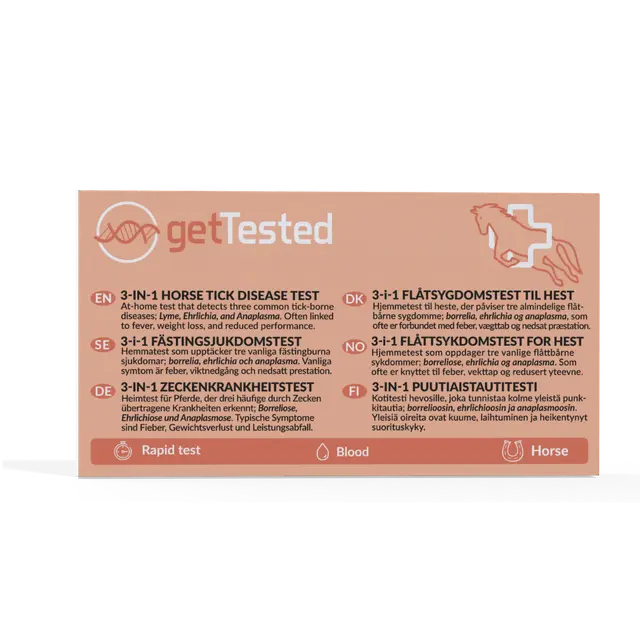
Rapid blood test for horses screening antibodies linked to Borrelia, Ehrlichia and Anaplasma after possible tick exposure.
Product details: GBP 64.99 — InStock — SKU CH-TDE — GetTested
About this test
Common Signs of Tick Borne Disease
Horses affected by tick borne infections may experience:
Fever
Swollen lymph nodes
Fatigue
Stiffness
Weight loss
Reduced appetite
Decreased performance
Reluctance to exercise or move
Who May Benefit from This Test?
This test may be suitable for horses that:
Live in areas where ticks are common
Spend time in forests, fields or wooded environments
Have been exposed to ticks
Show signs of fatigue, stiffness or reduced appetite
Have unexplained performance changes
Need a rapid first screen for common tick borne infections
Simple Home Testing
Collect a small blood sample, mix it with the provided buffer and apply it to the test cassette.
Results are available in approximately 5 to 10 minutes and can be read directly from the test cassette.
What Is Included in the Kit?
1 x 3 in 1 tick disease test cassette
1 x Plastic tube with buffer
2 x Lancets
1 x Disposable pipette
Step by step instructions
Biomarkers included
- Ehrlichia Antibodies: Ehrlichia antibodies are immune proteins produced after exposure to Ehrlichia bacteria, which are spread by ticks and can infect white blood cells in dogs. A positive antibody result can indicate previous or ongoing exposure and may be linked to fever, tiredness, reduced appetite, swollen lymph nodes, bruising, nosebleeds or changes in blood cell levels. Ehrlichia antibodies can help show whether
- Borrelia Antibodies: Borrelia antibodies are immune proteins produced after exposure to Borrelia bacteria, which are spread through tick bites and can cause Lyme disease in dogs. A positive antibody result can indicate previous or ongoing exposure and may be linked to fever, tiredness, reduced appetite, joint pain, stiffness, lameness or swollen lymph nodes.
- Anaplasma Antibodies: Anaplasma antibodies are immune proteins produced after exposure to Anaplasma bacteria, which are transmitted by ticks and can affect blood cells and immune response in dogs. A positive antibody result can indicate previous or ongoing exposure and may be linked to fever, tiredness, reduced appetite, joint pain, stiffness, lameness, bruising or changes in platelet levels. Anaplasma antibodies can h
Frequently asked questions
How soon after a tick bite can I test my horse?
It takes time for a horse to develop detectable antibodies. We recommend waiting 4–6 weeks after a tick bite before using this equine tick-borne disease panel to avoid a false negative result.
Why test for multiple tick borne infections at once?
Tick borne infections can cause overlapping signs such as fatigue, stiffness, fever, reduced appetite and performance changes. Screening for several infections at once gives a broader first indication of possible tick related exposure.
Can tick borne infections be difficult to recognise in horses?
Yes. Signs can be vague, mild or gradual, which means tick related illness may not always be obvious from symptoms alone.
Customer reviews
4.6/5 (5)
- 5/5 — Super simple to use and gave me peace of mind about my gelding's lethargy.
- 4/5 — It’s a great screening tool for my pony. Just wish the lancet was a bit easier to handle, but otherwise perfect.
- 4/5 — Very convenient for the barn. Clear results and fast delivery.
- 5/5 — Got the results in 10 minutes flat! Really easy instructions to follow.
- 5/5 — Saved me a huge vet bill for the initial screening. Very happy with how easy it was.