HIV Test
GetTested’s HIV Self Test is a rapid at home finger prick blood test for people who want a private and discreet first screening for HIV. If you may have had a possible exposure, want peace of mind, or include HIV testing as part of your regular sexual health routine, this test gives a clear result in approximately 10 minutes from home. The test screens for antibodies to both HIV 1 and HIV 2, helping indicate whether HIV antibodies may be present in the blood.
£42.99
£49.99
Saturday or Sunday delivery available.
Discreet, tracked delivery
About HIV Test
Understand HIV Self Testing
HIV can sometimes be present without obvious symptoms, especially in the early stages. Some people may experience flu like symptoms such as fever, fatigue, sore throat, swollen lymph nodes or muscle aches, while others notice nothing at all.
This rapid self test detects HIV 1 and HIV 2 antibodies from a finger prick blood sample. Because antibodies take time to develop after exposure, testing at the right time is important for a reliable result.
The test is intended as an initial screening tool. A positive result should always be confirmed through healthcare services.
What This Test Measures
Biomarkers
2 biomarkers
Sample
Blood
Results in
10 minutes
Format
Rapid Test
What the Result Can Tell You
The test gives a positive or negative result.
Positive result
A positive result means HIV antibodies may be present. This result must be confirmed through healthcare services.
Negative result
A negative result means no HIV antibodies were detected at the test level. If the test is taken too early after exposure, antibodies may not yet be detectable.
If the test does not show a valid control line or the result cannot be read according to the instructions, the test should be considered not interpretable and repeated with a new test.
How It Works
- 1
Collect Your Sample
- 2
Prepare the Test
- 3
Wait for the Result
- 4
Read Your Result
Sample Collection
The sample is collected using a finger prick blood sample at home. A small amount of blood is collected using the included lancet and pipette, mixed with the provided solution and applied to the test device.
Have Questions?
Chat with our AI assistant for instant answers about this product, usage, or recommendations.
Over 500,000 Customers
4.8 out of 5 based on 5 reviews on this product
£42.99
£49.99
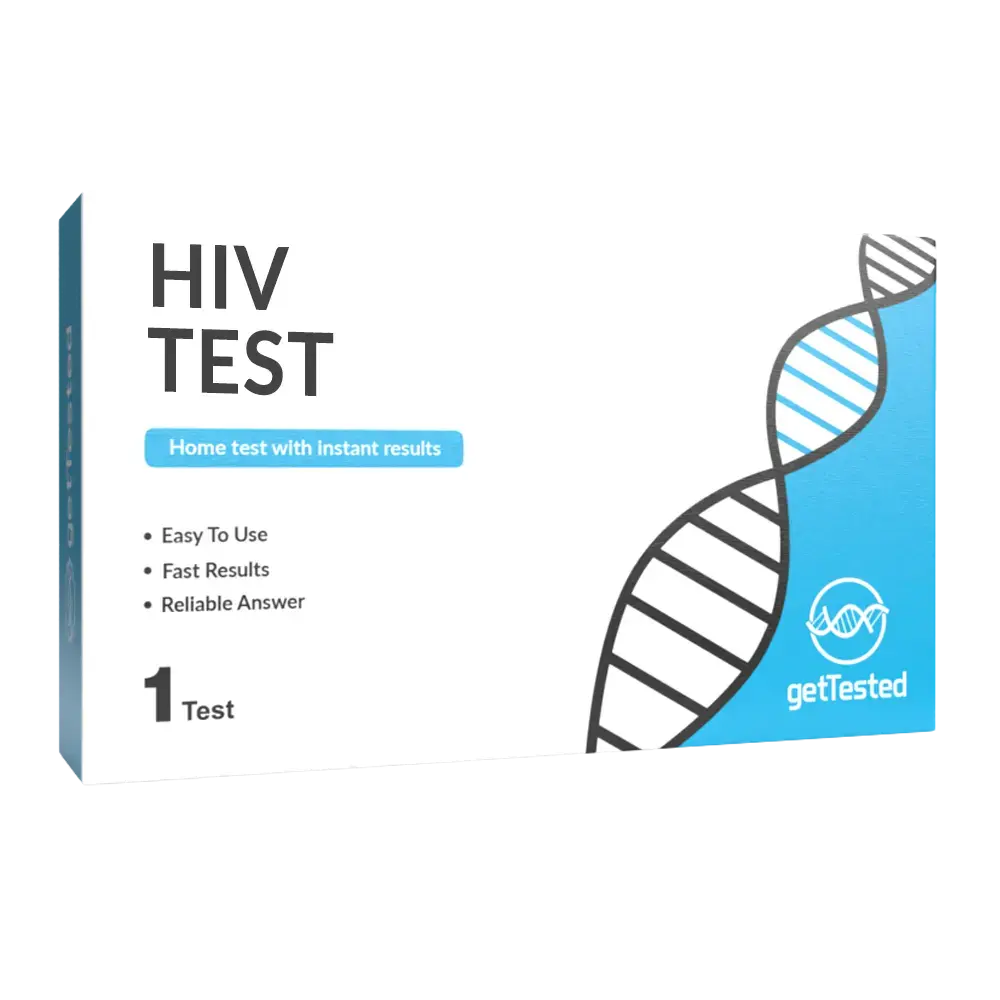
HIV Test
GetTested’s HIV Self Test is a rapid at home finger prick blood test for people who want a private and discreet first screening for HIV. If you may have had a possible exposure, want peace of mind, or include HIV testing as part of your regular sexual health routine, this test gives a clear result in approximately 10 minutes from home. The test screens for antibodies to both HIV 1 and HIV 2, helping indicate whether HIV antibodies may be present in the blood.
£42.99
£49.99
Saturday or Sunday delivery available.
Discreet, tracked delivery
Understand HIV Self Testing
HIV can sometimes be present without obvious symptoms, especially in the early stages. Some people may experience flu like symptoms such as fever, fatigue, sore throat, swollen lymph nodes or muscle aches, while others notice nothing at all.
This rapid self test detects HIV 1 and HIV 2 antibodies from a finger prick blood sample. Because antibodies take time to develop after exposure, testing at the right time is important for a reliable result.
The test is intended as an initial screening tool. A positive result should always be confirmed through healthcare services.
What This Test Measures
Biomarkers
2 biomarkers
Sample
Blood
Results in
10 minutes
Format
Rapid Test
What the Result Can Tell You
The test gives a positive or negative result.
Positive result
A positive result means HIV antibodies may be present. This result must be confirmed through healthcare services.
Negative result
A negative result means no HIV antibodies were detected at the test level. If the test is taken too early after exposure, antibodies may not yet be detectable.
If the test does not show a valid control line or the result cannot be read according to the instructions, the test should be considered not interpretable and repeated with a new test.
How It Works
- 1
Collect Your Sample
- 2
Prepare the Test
- 3
Wait for the Result
- 4
Read Your Result
Sample Collection
The sample is collected using a finger prick blood sample at home. A small amount of blood is collected using the included lancet and pipette, mixed with the provided solution and applied to the test device.
When is the best time to take the test after potential exposure?
Does this test screen for other STIs?
What should I do if my result is positive?
HIV Test price and what’s included
Price history
Current price
£42.99
Starting price
£42.99
Total change
£0.00
No. of changes
0
Stable Pricing
No hidden fees. The price you see is the price you pay.
Price Lock Guarantee
Your price won't change after purchase.
Have Questions About This Product?
Chat with our AI assistant for instant answers about this product, usage guidelines, or personalized recommendations.
Over 500,000 Customers
4.8 out of 5 based on 5 reviews on this product