4-in-1 STI Test (Chlamydia, Gonorrhoea, Mycoplasma & Syphilis)
GetTested’s 4-in-1 STI Test (Chlamydia, Gonorrhoea, Mycoplasma & Syphilis) is a discreet at home STI test for people who want broader sexual health screening after unprotected sex, a new partner, multiple partners, travel or possible exposure. This test screens for chlamydia, gonorrhoea, Mycoplasma genitalium and syphilis, giving broader coverage than testing for one infection alone. Many STIs can cause mild symptoms or no symptoms at all, which means you may not know if something is present unless you test.
£79.99
Pre-2pm delivery Tuesday, 27 October. Ships Monday.
Discreet, tracked delivery
About 4-in-1 STI Test (Chlamydia, Gonorrhoea, Mycoplasma & Syphilis)
Broader STI Screening from Home
Some STIs can cause similar or overlapping symptoms, such as burning when urinating, unusual discharge, genital irritation, pelvic discomfort, sores or skin changes. Others may be present without obvious signs.
The 4-in-1 STI Test is designed for people who want a broader check that includes both common bacterial STIs and syphilis, an infection that can sometimes develop gradually and be missed in early stages.
This makes the test a strong option when symptoms are unclear, after possible higher risk exposure, or when you want more reassurance from one discreet home test.
What This Test Measures
Biomarkers
4 biomarkers
Sample
Urine
Results in
10-15 Business days
Format
Lab Test
How It Works
- 1
Order Your Kit
- 2
Collect and Dry Your Sample
- 3
Send It Back
- 4
Receive Your Results
Dried Urine Sample Collection
The sample is collected using a dried urine sample at home. You collect urine using the included materials, apply it to the collection card and allow it to dry before returning it to the laboratory.
This method is practical, hygienic and suitable for convenient STI testing from home.
Have Questions?
Chat with our AI assistant for instant answers about this product, usage, or recommendations.
Over 500,000 Customers
4.7 out of 5 based on 3 reviews on this product
£79.99
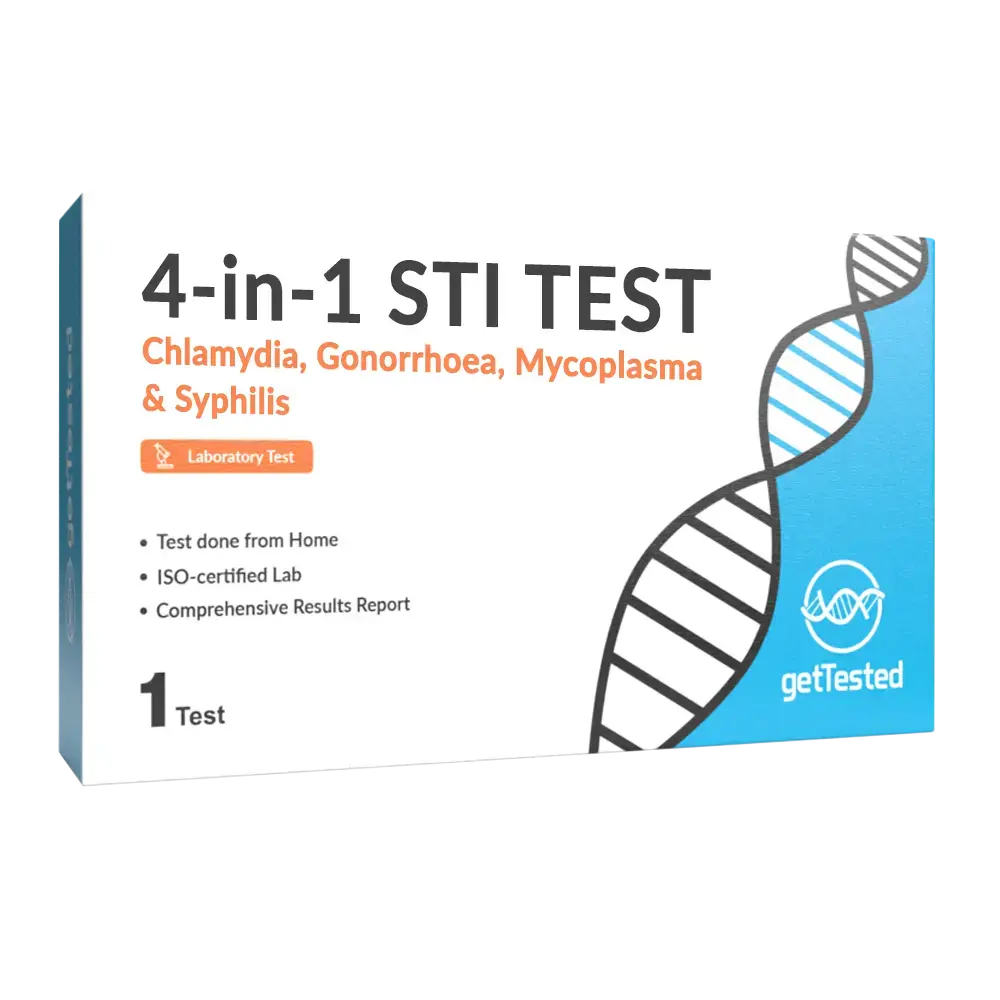
4-in-1 STI Test (Chlamydia, Gonorrhoea, Mycoplasma & Syphilis)
GetTested’s 4-in-1 STI Test (Chlamydia, Gonorrhoea, Mycoplasma & Syphilis) is a discreet at home STI test for people who want broader sexual health screening after unprotected sex, a new partner, multiple partners, travel or possible exposure. This test screens for chlamydia, gonorrhoea, Mycoplasma genitalium and syphilis, giving broader coverage than testing for one infection alone. Many STIs can cause mild symptoms or no symptoms at all, which means you may not know if something is present unless you test.
£79.99
Pre-2pm delivery Tuesday, 27 October. Ships Monday.
Discreet, tracked delivery
Broader STI Screening from Home
Some STIs can cause similar or overlapping symptoms, such as burning when urinating, unusual discharge, genital irritation, pelvic discomfort, sores or skin changes. Others may be present without obvious signs.
The 4-in-1 STI Test is designed for people who want a broader check that includes both common bacterial STIs and syphilis, an infection that can sometimes develop gradually and be missed in early stages.
This makes the test a strong option when symptoms are unclear, after possible higher risk exposure, or when you want more reassurance from one discreet home test.
What This Test Measures
Biomarkers
4 biomarkers
Sample
Urine
Results in
10-15 Business days
Format
Lab Test
How It Works
- 1
Order Your Kit
- 2
Collect and Dry Your Sample
- 3
Send It Back
- 4
Receive Your Results
Dried Urine Sample Collection
The sample is collected using a dried urine sample at home. You collect urine using the included materials, apply it to the collection card and allow it to dry before returning it to the laboratory.
This method is practical, hygienic and suitable for convenient STI testing from home.
Why does this test include syphilis?
Can sexually transmitted infections occur without symptoms?
When should I take the test after potential exposure?
4-in-1 STI Test (Chlamydia, Gonorrhoea, Mycoplasma & Syphilis) price and what’s included
Price history
Current price
£79.99
Starting price
£79.99
Total change
£0.00
No. of changes
0
Stable Pricing
No hidden fees. The price you see is the price you pay.
Price Lock Guarantee
Your price won't change after purchase.
Have Questions About This Product?
Chat with our AI assistant for instant answers about this product, usage guidelines, or personalized recommendations.
Over 500,000 Customers
4.7 out of 5 based on 3 reviews on this product