Testosterone Test (Blood)
GetTested’s Testosterone Test (Blood) measures total testosterone, the primary male sex hormone that also plays an important role in women’s health. Testosterone is essential for energy levels, muscle strength, libido, mood, and overall hormonal balance. Abnormal levels may be associated with symptoms such as fatigue, reduced sexual function, mood changes, or fertility issues. By analyzing testosterone in blood, the test provides a reliable assessment of your hormonal status.
For those who prefer a non-invasive option, GetTested also offers a saliva-based testosterone test.
£49.99
£59.99
Pre-2pm delivery Tomorrow, 9 October.
Discreet, tracked delivery
About Testosterone Test (Blood)
Hormonal Balance and Testosterone Levels
This test measures total testosterone in blood, providing insight into your overall hormonal health. By understanding your testosterone levels, you can identify potential imbalances linked to energy, fertility, mood, and physical performance, and take steps toward improving your well-being.
What This Test Measures
Biomarkers
1 biomarkers
Sample
Blood
Results in
10-15 business days
Format
Lab Test
How It Works
Order Your Kit: Purchase your test online
Collect Your Sample: Perform a simple finger-prick blood test (DBS) at home
Send It Back: Mail your sample to the lab
Receive Results: Access your digital results once analysis is complete
Sample Collection
The sample is collected using a dry blood spot (DBS) method. You take a small blood sample via a finger prick at home and send it to the lab for analysis. This method is simple, safe, and minimally invasive.
Have Questions?
Chat with our AI assistant for instant answers about this product, usage, or recommendations.
Over 500,000 Customers
4.6 out of 5 based on 5 reviews on this product
£49.99
£59.99
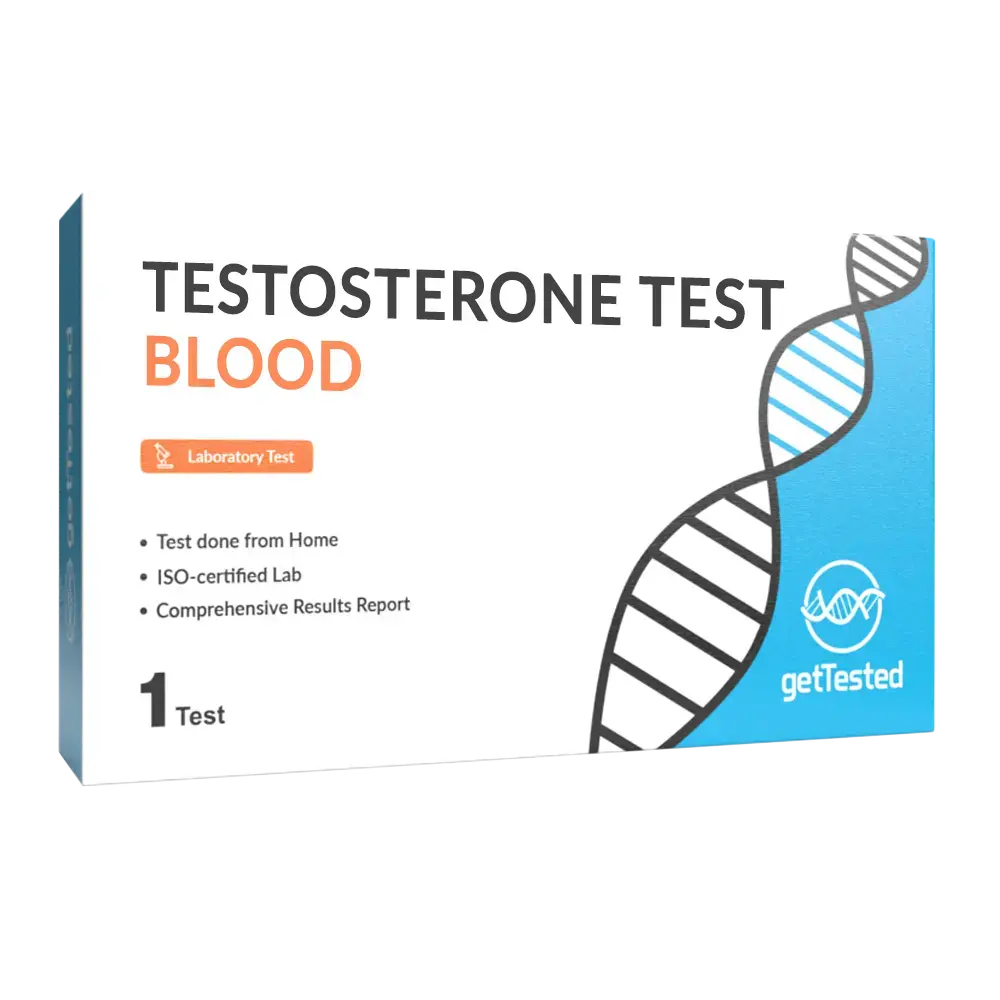
Testosterone Test (Blood)
GetTested’s Testosterone Test (Blood) measures total testosterone, the primary male sex hormone that also plays an important role in women’s health. Testosterone is essential for energy levels, muscle strength, libido, mood, and overall hormonal balance. Abnormal levels may be associated with symptoms such as fatigue, reduced sexual function, mood changes, or fertility issues. By analyzing testosterone in blood, the test provides a reliable assessment of your hormonal status.
For those who prefer a non-invasive option, GetTested also offers a saliva-based testosterone test.
£49.99
£59.99
Pre-2pm delivery Tomorrow, 9 October.
Discreet, tracked delivery
Hormonal Balance and Testosterone Levels
This test measures total testosterone in blood, providing insight into your overall hormonal health. By understanding your testosterone levels, you can identify potential imbalances linked to energy, fertility, mood, and physical performance, and take steps toward improving your well-being.
What This Test Measures
Biomarkers
1 biomarkers
Sample
Blood
Results in
10-15 business days
Format
Lab Test
How It Works
Order Your Kit: Purchase your test online
Collect Your Sample: Perform a simple finger-prick blood test (DBS) at home
Send It Back: Mail your sample to the lab
Receive Results: Access your digital results once analysis is complete
Sample Collection
The sample is collected using a dry blood spot (DBS) method. You take a small blood sample via a finger prick at home and send it to the lab for analysis. This method is simple, safe, and minimally invasive.
How does it work? / When do I get my results?
2. Perform the test.
3. Send a sample at the beginning of the week (to avoid delays).
4. Results digitally in 10–15 business days.
When is the best time of day to take the testosterone test?
Who should consider taking a testosterone blood test?
Do I need to fast before taking the test?
Testosterone Test (Blood) price and what’s included
Price history
Current price
£49.99
Starting price
£49.99
Total change
£0.00
No. of changes
0
Stable Pricing
No hidden fees. The price you see is the price you pay.
Price Lock Guarantee
Your price won't change after purchase.
Have Questions About This Product?
Chat with our AI assistant for instant answers about this product, usage guidelines, or personalized recommendations.
Over 500,000 Customers
4.6 out of 5 based on 5 reviews on this product