Dog Gut Health & Parasite Test
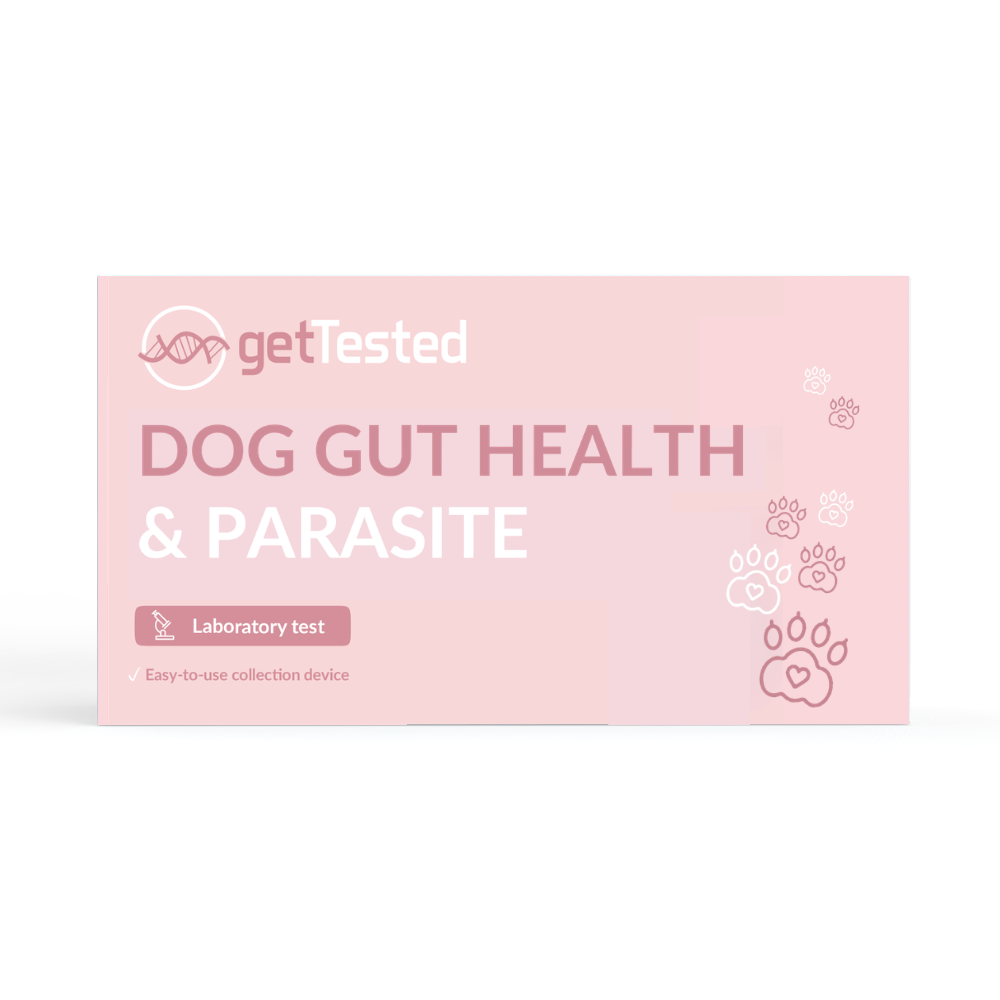
Comprehensive stool laboratory test for dogs analysing over 90 gut health markers, including microbiome composition, parasites, bacteria, viruses, yeast and gut imbalance.
Product details: GBP 399 — OutOfStock — SKU 2106 — GetTested
About this test
Comprehensive Gut Health Analysis
The gut microbiome plays an important role in digestion, nutrient absorption, immune defence and daily comfort. When the balance of microorganisms is disrupted, some dogs may develop ongoing or recurring digestive symptoms.
By analysing a wide range of gut related markers in one test, the Dog Gut Health & Parasite Test can help identify patterns that may otherwise be missed.
What the Test Analyses
The test includes analyses 96 gut health markers, including:
Parasites and worms
Viruses associated with digestive symptoms
Yeast and fungi, including Candida species
Beneficial and potentially harmful bacteria
Pathogenic bacteria linked to infection or imbalance
Gut microbiome composition
Diversity and balance markers
Together, these markers provide a detailed overview of your dog’s intestinal environment.
Who May Benefit from This Test?
This test may be suitable for dogs that:
Have recurring diarrhoea or loose stools
Experience gas, bloating or digestive discomfort
Have a sensitive stomach or changing appetite
May have parasites, infection or gut imbalance
Have ongoing digestive symptoms without a clear cause
Need a deeper gut health assessment
Simple Home Sample Collection
Collect a stool sample at home using the included collection kit and send it to the laboratory for analysis.
Once the sample has been analysed, your results are available digitally within 10 to 15 business days, with clear explanations of the findings.
What Is Included in the Kit?
Stool sample collection kit
Sample tube
Return packaging
Step by step instructions
Biomarkers included
- Fusobacteria: Microbiome Composition — Fusobacteria are a genus of anaerobic bacteria that are commonly found in the human gut and oral cavity. While typically commensal, increased levels or specific species of Fusobacteria have been associated with inflammatory bowel disease and certain types of cancer, making them a potential indicator of disease activity.
- Canine Firmicutes: Microbiome Composition — Firmicutes is one of the major bacterial phyla in the canine gut microbiome. This group includes many bacteria involved in breaking down dietary components and producing short chain fatty acids, which can support the intestinal lining and normal gut function. Changes in Firmicutes levels can reflect shifts in the overall microbial balance and may be linked to changes in stool quality, digestion, g
- Canine Proteobacteria: Microbiome Composition — Proteobacteria is a large phylum of gram negative bacteria found in the canine gut microbiome. This group includes both harmless gut bacteria and bacteria that may become problematic if they increase too much, such as Escherichia, Salmonella, Helicobacter and Klebsiella. Low levels can be part of a normal gut profile, while higher levels may reflect dysbiosis, microbial instability or inflammation
- Actinobacteria: Microbiome Composition — Actinobacteria is a major group of bacteria in the canine gut microbiome. This group includes bacteria involved in digestion, nutrient processing, and support of a stable gut environment. Some Actinobacteria, such as Bifidobacterium species, are often linked to beneficial gut functions. Lower levels may suggest reduced presence of these supportive bacteria, while higher levels may reflect a shift
- Verrucomicrobia: Microbiome Composition — Verrucomicrobia is a genus of bacteria that is part of the human gut microbiome. Its abundance or relative presence can be associated with various health conditions, including inflammatory bowel disease and obesity, and it plays a role in nutrient metabolism. Studying Verrucomicrobia helps in understanding the complex interplay between the gut microbiota and host health.
- Euryarchaeota: Microbiome Composition — Euryarchaeota is a group of microorganisms in the gut microbiome. They are not bacteria, but archaea, which are a separate type of microorganism. Some Euryarchaeota can produce methane during fermentation, a process where microorganisms break down material in the gut. In many dogs, Euryarchaeota levels may be very low or not detected. Higher levels may reflect increased methane related fermentatio
- Bacteroidetes: Microbiome Composition — Bacteroidetes is a major group of bacteria in the canine gut microbiome. This group includes bacteria that help break down dietary fibre and complex carbohydrates, supporting digestion and nutrient processing. Through this fermentation process, Bacteroidetes can contribute to the production of short chain fatty acids, which help support the gut environment and intestinal lining. Lower levels may s
- Shannon Diversity Index: Microbial Diversity and Balance — The Shannon Diversity Index is a calculated measure of microbial diversity in the gut microbiome. It reflects both how many different microbial species are present and how evenly they are distributed. A more diverse microbiome may indicate a broader and more resilient gut ecosystem, where no single group of microorganisms dominates too strongly. Lower diversity may reflect reduced microbiome stabi
- Firmicutes/Bacteroidetes Ratio: Microbial Diversity and Balance — The Firmicutes/Bacteroidetes Ratio is a calculated value that compares two major bacterial groups in the gut microbiome. It can reflect how the microbial community is structured and may be influenced by diet, fermentation patterns, and overall gut balance. A shift in this ratio does not point to one specific condition, but it can help show whether the relationship between these two major bacterial
- Prevotella/Bacteroides Ratio: Microbial Diversity and Balance — The Prevotella/Bacteroides Ratio is a calculated value that compares two bacterial groups involved in breaking down carbohydrates, fibre, and other dietary components. Prevotella is often linked to fibre and plant based carbohydrate fermentation, while Bacteroides is involved in breaking down a broader range of dietary material. This ratio may reflect patterns in diet, fermentation activity, and t
- Campylobacter jejuni: Gut Related and Zoonotic Bacteria — Campylobacter jejuni is a bacterium that can be found in the gastrointestinal tract of dogs and other animals. Some dogs may carry Campylobacter jejuni without obvious symptoms, while higher levels may be associated with digestive changes such as diarrhoea, soft stool, mucus in stool, abdominal discomfort, reduced appetite, or lethargy. Campylobacter jejuni may be relevant because it can affect th
- Clostridium perfringens: Gut Related and Zoonotic Bacteria — Clostridium perfringens is a bacterium commonly found in the canine intestine. It can be part of the normal gut flora, but some strains can produce toxins, which are harmful substances that may irritate or damage the gut lining. Higher levels may be more meaningful when toxin related activity, digestive signs, or a disrupted microbiome pattern are also present. When Clostridium perfringens affects
- Campylobacter coli: Gut Related and Zoonotic Bacteria — Campylobacter coli is a bacterium that can occur in the intestinal tract of dogs and other animals. It is related to other Campylobacter species and may be part of a broader Campylobacter pattern in the gut profile. Some dogs may carry Campylobacter species without obvious symptoms, while higher levels may be associated with digestive changes such as diarrhoea, altered stool quality, mucus in stoo
- Salmonella enterica: Gut Related and Zoonotic Bacteria — Salmonella enterica is a bacterium that can be detected in stool. It is not considered a normal part of the dog’s gut microbiome. Dogs may be exposed through contaminated food, raw meat, faeces, water, soil, or environments where Salmonella has been present. Some dogs can carry Salmonella without obvious signs, while others may develop digestive or general symptoms. When Salmonella enterica affect
- Campylobacter upsaliensis: Gut Related and Zoonotic Bacteria — Campylobacter upsaliensis is a Campylobacter species that can be found in the intestinal tract of dogs. Compared with some other Campylobacter species, it is especially associated with dogs and may sometimes be carried without obvious symptoms. Higher levels may be associated with digestive changes such as diarrhoea, soft stool, mucus in stool, abdominal discomfort, reduced appetite, or lethargy.
- Canine Yersinia enterocolitica: Gut Related and Zoonotic Bacteria — Yersinia enterocolitica is a bacterium that can be detected in stool and is linked to the gastrointestinal tract. It is not considered a typical part of the dog’s healthy gut microbiome. Dogs may be exposed through contaminated food, water, faeces, soil, or environments where Yersinia has been present. Some animals may carry Yersinia enterocolitica without obvious signs, while higher levels or det
- Canine Clostridioides difficile: Gut Related and Zoonotic Bacteria — Clostridioides difficile is a bacterium that can be found in the intestinal tract. In some situations, it can produce toxins, which are harmful substances that may irritate or damage the gut lining. This may become more relevant when the normal microbiome balance is disrupted, for example after antibiotic exposure or other changes in the gut environment. Higher levels of Clostridioides difficile m
- Klebsiella pneumoniae: Imbalance Related Bacteria — Klebsiella pneumoniae is a bacterium that can be found in the gut and other parts of the body. In balanced amounts, it may be present without causing problems. Higher levels may reflect increased opportunistic growth, meaning that the bacterium has gained more space when normal bacterial competition is reduced. Klebsiella pneumoniae levels can help show whether the gut profile is shifting toward b
- Canine Enterococcus cecorum: Imbalance Related Bacteria — Enterococcus cecorum is a bacterium that can be found in the intestinal tract of animals. In dogs, it is less commonly discussed than Enterococcus faecalis and Enterococcus faecium, but it may still reflect changes in the gut bacterial community. Higher levels may suggest a shift in the intestinal environment, especially when stool quality, digestion, or appetite has changed. Enterococcus cecorum
- Canine Enterococcus faecalis: Imbalance Related Bacteria — Enterococcus faecalis is a bacterium that can normally be found in the intestines of dogs. In balanced amounts, it may be part of the normal gut microbiome. This marker is mainly relevant because Enterococcus faecalis can become more noticeable when the usual bacterial balance is disturbed, for example after digestive stress, diet changes, or shifts in the gut environment. Higher levels may be ass
- Canine Escherichia coli (E. coli): Imbalance Related Bacteria — Escherichia coli, often called E. coli, is a bacterium that can normally live in the intestines. Many E. coli strains are harmless and can be part of the gut microbiome, while some strains may become more relevant when the gut environment is disturbed. Higher levels may reflect a shift toward bacteria that grow well when microbial stability is reduced or when the intestinal environment has changed
- Canine Enterococcus faecium: Imbalance Related Bacteria — Enterococcus faecium is a bacterium that can occur in the intestines and may be part of the normal gut microbiome. Compared with Enterococcus faecalis, this species is often more relevant as an opportunistic bacterium, meaning it may become more noticeable when the gut environment is disturbed or when normal microbial competition is reduced. Higher levels may reflect a shift toward bacteria that t
- Staphylococcus aureus: Imbalance Related Bacteria — Staphylococcus aureus is a bacterium most often associated with the skin and mucous membranes, but it can sometimes be detected in the gastrointestinal tract. It is not usually considered a core gut bacterium in dogs. Its presence in a gut profile may reflect transfer from skin or mucosal surfaces, or a shift in the gut environment that allows less typical gut bacteria to become more noticeable. H
- Staphylococcus pseudintermedius: Imbalance Related Bacteria — Staphylococcus pseudintermedius is a bacterium commonly found on the skin and mucous membranes of dogs. Unlike Staphylococcus aureus, this species is especially associated with dogs and is often linked to the dog’s skin, ears, and other body surfaces. When it appears in a gut microbiome profile, it may reflect transfer from the dog’s own skin or mucosal surfaces, or a shift in the gut environment
- Streptococcus species: Imbalance Related Bacteria — Streptococcus species refers to a group of related bacteria that can live in several areas of the body, including the mouth, throat, skin, mucous membranes, and gastrointestinal tract. Some Streptococcus species can be part of the normal microbial environment, while others may become more noticeable when bacterial balance changes. In a gut profile, Streptococcus species levels may reflect a connec
- Peptoclostridium species: Imbalance Related Bacteria — Peptoclostridium species refers to a group of bacteria that can live in the intestinal tract. These bacteria are involved in the breakdown of proteins and other nutrients by gut microbes. This process is called fermentation and can be a normal part of digestion. When the balance shifts, higher levels of Peptoclostridium species may be associated with gas, stronger stool odour, changes in stool qua
- Helicobacter species: Imbalance Related Bacteria — Helicobacter species refers to a group of bacteria that can live in the gastrointestinal tract, especially the stomach. Many dogs can carry Helicobacter species without obvious signs. Higher levels may be more relevant when they appear together with signs of irritation in the stomach or upper gastrointestinal tract. This may be associated with vomiting, abdominal discomfort, reduced appetite, weig
- Methanobrevibacter smithii: Gas and Fermentation Related Bacteria — Methanobrevibacter smithii is not a bacterium, but an archaeon, which is a separate type of microorganism that can live in the gut. It is involved in methane production during fermentation, the process where gut microbes break down food components. Higher levels may be associated with increased methane related fermentation, gas production, bloating, slower gut movement, or changes in stool consist
- Canine Desulfovibrio piger: Gut Lining Related Bacteria — Desulfovibrio piger is a sulfate reducing bacterium, meaning it can use sulfur containing compounds during fermentation in the gut. This process can produce hydrogen sulfide, a gas with a strong smell that may affect the gut environment when present in higher amounts. Higher levels of Desulfovibrio piger may reflect increased sulfur related fermentation and may be seen together with strong smellin
- Absiella dolichum: Gut Lining Related Bacteria — Absiella dolichum is a gut bacterium that is still relatively new and less well established in veterinary microbiome research. It may be detected as part of the dog’s gut bacterial community, but its role is not as clearly defined as many better known gut bacteria. Higher levels may reflect a shift in the wider microbial environment, especially when seen together with altered stool quality, mucus
- Sutterella species: Gut Lining Related Bacteria — Sutterella species refers to a group of bacteria that can live in the intestinal tract and are often discussed in relation to the gut lining. These bacteria may reflect changes in the intestinal environment, especially near the surface of the gut. Higher levels may be associated with altered stool quality, digestive sensitivity, mucus in stool, or signs of irritation in the intestinal tract. Sutte
- Romboutsia sedimentorum: Core Gut Bacteria — Romboutsia sedimentorum is a gut bacterium involved in the breakdown and processing of different food residues in the intestine. Unlike markers that mainly reflect fibre or protein fermentation, Romboutsia sedimentorum may reflect broader nutrient processing linked to a mixed diet. Its levels can help show whether bacteria involved in processing different dietary components are represented in the
- Blautia wexlerae: Core Gut Bacteria — Blautia wexlerae is a gut bacterium within the Blautia group and is involved in microbial fermentation. It is linked to the production of metabolites, which are small substances made when gut bacteria break down nutrients. These metabolites can help support the gut environment and interactions between gut bacteria and the intestinal lining. Blautia wexlerae levels can help show whether bacteria in
- Prevotella copri: Core Gut Bacteria — Prevotella copri is a gut bacterium involved in breaking down fibre, plant based food components, and complex carbohydrates. Its levels can help show whether fibre and carbohydrate fermentation is a noticeable part of the dog’s gut microbiome pattern. Higher levels may reflect stronger carbohydrate and fibre fermentation, while lower levels may suggest that this type of fermentation is less promin
- Bacteroides uniforms: Core Gut Bacteria — Bacteroides uniformis is a gut bacterium within the Bacteroides group. It is involved in processing dietary carbohydrates and supporting the normal breakdown of nutrients in the intestine. Compared with some other Bacteroides species, Bacteroides uniformis may help show the diversity of carbohydrate processing bacteria in the gut. In balanced levels, it may be part of a stable gut environment, whi
- Blautia producta: Core Gut Bacteria — Blautia producta is a gut bacterium within the Blautia group and is involved in the fermentation of dietary components. Blautia species are linked to the production of short chain fatty acids, which are compounds that help support the gut lining and intestinal environment. Blautia producta levels can help show whether bacteria involved in fermentation and production of supportive gut metabolites a
- Ruminococcus species: Core Gut Bacteria — Ruminococcus species refers to a group of gut bacteria that help break down fibre and resistant starch, which are parts of food that the dog cannot fully digest on its own. This makes them relevant for fibre fermentation, stool formation, and the production of compounds that help support the intestinal lining. Balanced Ruminococcus levels may reflect that fibre and harder to digest carbohydrates a
- Fusobacterium nucleatum: Core Gut Bacteria — Fusobacterium nucleatum is a bacterium that can occur on mucosal surfaces, including the mouth and gastrointestinal tract. This makes it different from some other Fusobacterium markers, because it may reflect bacteria linked to both oral and gut microbial patterns. Higher levels may be seen together with bad breath, changes linked to the mouth or oral microbial environment, digestive irritation, m
- Blautia hansenii: Core Gut Bacteria — Blautia hansenii is a gut bacterium that belongs to the Blautia group. It is involved in microbial fermentation, where gut bacteria break down dietary components and produce compounds such as short chain fatty acids. These compounds can help support the intestinal lining and the overall gut environment. Blautia hansenii levels can help show whether bacteria linked to fibre fermentation and product
- Canine Faecalibacterium prausnitzii: Core Gut Bacteria — Faecalibacterium prausnitzii is a gut bacterium often linked to beneficial gut functions. It is strongly associated with the production of butyrate, a short chain fatty acid that helps nourish and support the intestinal lining. Faecalibacterium prausnitzii is often discussed in relation to gut barrier support and a stable intestinal environment. Lower levels may reflect reduced microbial support f
- Fusobacterium perfoetens: Core Gut Bacteria — Fusobacterium perfoetens is a gut bacterium linked to the breakdown and fermentation of protein rich and nitrogen containing material in the intestine. It is especially relevant for understanding fermentation patterns that may affect stool odour and gas production. Higher levels may be associated with stronger smelling stool, gas, altered stool quality, or a gut environment where protein breakdown
- Fusobacterium varium: Core Gut Bacteria — Fusobacterium varium is a gut bacterium that can add detail to the overall Fusobacterium pattern in the canine microbiome. While some Fusobacterium species are more closely linked to stool odour, protein fermentation, or mucosal surfaces, Fusobacterium varium can help show whether this bacterial group is more broadly represented in the gut profile. Changes in its levels may be associated with shif
- Allobaculum stercoricanis: Core Gut Bacteria — Allobaculum stercoricanis is a gut bacterium commonly found in dogs. It is involved in microbial fermentation, where gut bacteria break down parts of the diet and produce compounds such as lactate and butyrate that can help support the intestinal environment. Allobaculum stercoricanis levels can help show whether bacteria linked to normal digestive fermentation and supportive metabolite production
- Megamonas funiformis: Core Gut Bacteria — Megamonas funiformis is a gut bacterium involved in the fermentation of carbohydrates and other dietary components. During fermentation, gut bacteria break down food residues and produce compounds that can influence the gut environment. Megamonas funiformis levels can help show whether carbohydrate fermentation is a noticeable part of the dog’s gut microbiome pattern. Changes in its levels may be
- Fusobacterium mortiferum: Core Gut Bacteria — Fusobacterium mortiferum is an anaerobic gut bacterium, meaning it grows in low oxygen environments such as the intestine. It is mainly relevant because it may reflect how protein rich food residues are broken down and fermented in the gut. Higher levels may be associated with a gut environment where protein fermentation is more active, and may be seen together with stronger stool odour, gas, or c
- Phocaeicola vulgatus: Core Gut Bacteria — Phocaeicola vulgatus, previously classified within the Bacteroides group, is a gut bacterium involved in breaking down dietary components and processing nutrients within the microbiome. It can be part of the normal intestinal microbiome and may help show how Bacteroides related bacteria are represented in the dog’s gut profile. Phocaeicola vulgatus levels can add detail about carbohydrate and nutr
- Blautia obeum: Core Gut Bacteria — Blautia obeum is a gut bacterium that belongs to the Blautia group. It is involved in microbial fermentation, where gut bacteria break down dietary components and produce compounds that can support the intestinal environment. Blautia obeum levels can help show whether bacteria linked to fibre fermentation and supportive metabolite production are represented in the dog’s gut profile. Changes in its
- Bacteroides fragilis: Core Gut Bacteria — Bacteroides fragilis is a bacterium that can live in the intestinal tract and is part of the broader Bacteroides group. Bacteroides bacteria are involved in breaking down complex carbohydrates and other dietary components, which supports normal gut fermentation and nutrient processing. In balanced levels, Bacteroides fragilis can be part of the normal gut environment. Changes in its levels may ref
- Collinsella species: Core Gut Bacteria — Collinsella species refers to a group of gut bacteria involved in carbohydrate processing and energy related activity in the intestine. These bacteria can be part of the normal gut microbiome, but changes in their levels may reflect shifts in how the microbiome processes energy from food, especially carbohydrates. Higher or lower levels may be seen together with changes in digestion, stool quality
- Bacteroides thetaiotaomicron: Core Gut Bacteria — Bacteroides thetaiotaomicron is a gut bacterium involved in breaking down complex carbohydrates and fibre like substances that the dog cannot fully digest on its own. This supports nutrient processing and contributes to the production of compounds that help maintain the gut environment. Bacteroides thetaiotaomicron levels can help show how the microbiome handles dietary fibre and carbohydrate ferm
- Lactobacillus johnsonii: Supportive Gut Bacteria — Lactobacillus johnsonii is a lactic acid producing gut bacterium from a group often linked to supportive gut functions. It is especially associated with the intestinal lining and the balance between helpful bacteria and bacteria that may grow more easily when the gut environment is disturbed. Lactobacillus johnsonii may help support a gut environment where the bacterial community remains more stab
- Lactobacillus reuteri: Supportive Gut Bacteria — Lactobacillus reuteri is a lactic acid producing bacterium that can live in the gut and on mucosal surfaces. It is especially known for producing substances that can influence which bacteria are able to grow in the local gut environment. This makes it relevant for microbial balance near the intestinal lining. Lower levels may suggest reduced support from bacteria that help keep the local gut envir
- Canine Bifidobacterium animalis: Supportive Gut Bacteria — Bifidobacterium animalis is a gut bacterium from a group often linked to beneficial gut functions. It is commonly associated with stool regularity, gut comfort, and support of a balanced bacterial environment. It can help break down certain carbohydrates and produce compounds that support the intestinal environment. Lower levels may suggest reduced support from beneficial gut bacteria, which may b
- Bifidobacterium pseudolongum: Supportive Gut Bacteria — Bifidobacterium pseudolongum is a gut bacterium from a group often linked to beneficial gut functions. It can help show whether the Bifidobacterium pattern is broad and varied, rather than mainly depending on only one or two better known species. This matters because a more limited Bifidobacterium pattern may be seen together with sensitive digestion, irregular stools, bloating, gas, constipation
- Canine Bifidobacterium longum: Supportive Gut Bacteria — Bifidobacterium longum is a gut bacterium from a group often linked to beneficial gut functions. It is especially associated with breaking down fibres and complex carbohydrates that are not fully digested earlier in the digestive tract. Through this fermentation, it can produce compounds that support the intestinal lining and help maintain a stable gut environment. Lower levels may suggest reduced
- Canine Akkermansia muciniphila: Supportive Gut Bacteria — Akkermansia muciniphila is a gut bacterium that lives close to the intestinal mucus layer, the protective mucus coating that lines the gut. It is often linked to mucus turnover, gut barrier function, and a stable intestinal environment. In balanced levels, it may be part of a healthy gut microbiome pattern. Lower levels may suggest reduced activity in the mucus layer, which may be seen together wi
- Canine Lactobacillus plantarum: Supportive Gut Bacteria — Lactobacillus plantarum is a lactic acid producing bacterium that can be found in the gut and is also common in fermented foods and plant based environments. It is especially linked to the fermentation of plant fibres and food components from the diet. Lower levels may suggest reduced activity from bacteria involved in plant and fibre fermentation, which may be seen together with bloating, gas, ir
- Bifidobacterium adolescentis: Supportive Gut Bacteria — Bifidobacterium adolescentis is a gut bacterium from a group often linked to beneficial gut functions. It helps break down certain carbohydrates and fibres and can produce compounds that support a stable gut environment. Lower levels may suggest reduced fibre fermentation and less support from beneficial gut bacteria, which may be seen together with sensitive digestion, bloating, gas, irregular st
- Canine Lactobacillus acidophilus: Supportive Gut Bacteria — Lactobacillus acidophilus is a lactic acid producing gut bacterium from a group often linked to supportive gut functions. It is especially known for helping maintain an acidic gut environment, which can make it harder for less desirable bacteria to become too dominant. Lactobacillus acidophilus is often associated with gut comfort, regular stool patterns, and balance between different bacteria in
- Weissella cibaria: Supportive Gut Bacteria — Weissella cibaria is a lactic acid producing bacterium that can be found in the gut, mouth, and fermented foods. It is less commonly discussed than Lactobacillus, but it can still give useful information about fermentation in the gut. Its presence may reflect activity in the gut, exposure from fermented foods, or bacteria from the mouth. Lower levels may simply mean that this type of lactic acid p
- Candida lambica: Fungi and Yeasts — Candida lambica is a yeast that can be detected in the gastrointestinal tract and on mucosal surfaces. Its presence may sometimes reflect exposure from the dog’s diet or environment, or temporary passage through the gut. Higher levels may suggest that Candida lambica is not only passing through, but that the gut environment has shifted in a way that allows this yeast to remain more noticeable. Thi
- Candida lipolytica: Fungi and Yeasts — Candida lipolytica is a yeast that can be detected in the gastrointestinal tract and on mucosal surfaces. This yeast is known for its ability to use and break down lipids, meaning fats and fat like substances. Higher levels may suggest that the gut environment is favourable for Candida lipolytica, especially in connection with fat rich or lipid influenced conditions in the gut. This may be relevan
- Canine Candida tropicalis: Fungi and Yeasts — Candida tropicalis is a Candida yeast that can be detected in the gastrointestinal tract and on mucosal surfaces. It is considered an opportunistic yeast, meaning it may become more noticeable when the normal balance between bacteria and fungi is disrupted. Higher levels may suggest that Candida tropicalis has become a larger part of the fungal profile, rather than only being present in low amount
- Canine Candida krusei: Fungi and Yeasts — Candida krusei is a Candida yeast that can be detected in the gastrointestinal tract and on mucosal surfaces. In low amounts, Candida krusei may be present without causing problems. Higher levels may suggest that the gut environment has shifted in a way that allows this yeast to become more noticeable. This may happen when the normal balance between bacteria and fungi is disrupted, for example aft
- Candida guilliermondii: Fungi and Yeasts — Candida guilliermondii is a less common Candida yeast species that can be detected in the gastrointestinal tract and on mucosal surfaces. In low amounts, Candida guilliermondii may be present without causing problems. Higher levels may suggest that the gut environment has shifted in a way that allows less common yeasts to grow more than expected. This can happen when the normal balance between bac
- Canine Candida parapsilosis: Fungi and Yeasts — Candida parapsilosis is a Candida yeast that can be detected in the gastrointestinal tract, on the skin, and on mucosal surfaces. It is often associated with body surfaces, such as the skin, mouth, and other mucosal linings. Higher levels in the gut may suggest that the intestinal environment has shifted in a way that allows Candida parapsilosis to remain present or grow more than expected. This m
- Canine Candida dubliniensis: Fungi and Yeasts — Candida dubliniensis is a Candida yeast that can be found in the gut, on mucous membranes, and sometimes on the skin. It is closely related to Candida albicans, but it is usually less prominent. In low and balanced amounts, it may be present without causing problems. When the normal balance between bacteria and fungi is disrupted, Candida dubliniensis may become more noticeable as part of a broade
- Candida kefyr: Fungi and Yeasts — Candida kefyr is a less common Candida yeast species that can be detected in the gastrointestinal tract and on mucosal surfaces. In low amounts, Candida kefyr may be present without causing problems. Higher levels may suggest that the gut environment has become more favourable for yeast growth, especially when the normal balance between bacteria and fungi is disrupted. Candida kefyr is also known
- Candida intermedia: Fungi and Yeasts — Candida intermedia is a less common Candida yeast species that can be detected in the gastrointestinal tract and on mucosal surfaces. In low amounts, Candida intermedia may be present without causing problems. Higher levels may suggest a broader and more varied yeast pattern, especially when Candida species beyond the most common types are also present. This may happen when the normal balance betw
- Canine Candida lusitaniae: Fungi and Yeasts — Candida lusitaniae is a Candida yeast that can be detected in the gastrointestinal tract and on mucosal surfaces. It is usually not one of the Candida yeasts expected to dominate a dog’s gut profile. Higher levels may suggest that the gut environment has shifted in a way that allows a less typical Candida yeast to become more noticeable. This may happen when bacterial competition is reduced, after
- Canine Candida glabrata: Fungi and Yeasts — Candida glabrata is a yeast species that can be detected in the gastrointestinal tract and on mucosal surfaces. In low amounts, yeasts may be present without causing problems, but Candida glabrata can become more noticeable when the normal balance between bacteria and fungi is disrupted. This can happen after factors such as antibiotic use, changes in immune resilience, gut imbalance, or other con
- Geotrichum species: Fungi and Yeasts — Geotrichum species are yeast like fungi that can be detected in the gastrointestinal tract and on mucosal surfaces. They are often linked to soil, food, and organic material. In a dog’s gut profile, low levels may reflect temporary passage after exposure from diet or surroundings. Higher levels may suggest that Geotrichum is not only passing through, but that the gut environment has shifted in a w
- Saccharomyces cerevisiae: Fungi and Yeasts — Saccharomyces cerevisiae is a yeast that can be detected in the gastrointestinal tract and is commonly known as baker’s or brewer’s yeast. In a dog’s gut profile, its presence may reflect exposure from diet, fermented ingredients, yeast containing supplements, or temporary passage through the gut. Higher levels may suggest that Saccharomyces cerevisiae is not only passing through, but that the gut
- Candida famata: Fungi and Yeasts — Candida famata is a less common yeast species that can be detected in the gastrointestinal tract and on mucosal surfaces. In low amounts, yeasts may be present without causing problems. Higher levels of Candida famata may suggest that the normal balance between bacteria and fungi has shifted, allowing less common yeast species to become more noticeable. This can happen after factors such as antibi
- Canine Candida albicans: Fungi and Yeasts — Candida albicans is a yeast that can normally be found in the gut, on mucous membranes, and sometimes on the skin or in the ears. In low and balanced amounts, it may be present without causing problems. When the normal balance between bacteria and fungi is disrupted, Candida albicans may grow more than expected and become part of a broader yeast imbalance pattern. This can happen after factors suc
- Rhodotorula species: Fungi and Yeasts — Rhodotorula species are environmental yeasts that can be detected in the gastrointestinal tract and on mucosal surfaces. They are often linked to moist environments, water, air, and surfaces in the surroundings. In a dog’s gut profile, low levels may reflect external exposure from the environment, followed by temporary passage through the gut. Higher levels may suggest that Rhodotorula is not only
- Canine Entamoeba histolytica: Parasites — Entamoeba histolytica is a microscopic intestinal parasite that can be detected in stool. It is not considered a normal part of the dog’s gut microbiome. Detection may reflect exposure through water, food, or surroundings that have been contaminated with faeces. Entamoeba histolytica is mainly linked to the large intestine, where it may irritate the intestinal lining and, in more significant cases
- Canine Cyclospora cayetanensis: Parasites — Cyclospora cayetanensis is a microscopic intestinal parasite that can be detected in stool. It is not considered a normal part of the dog’s gut microbiome. Detection may reflect exposure through contaminated water, food, soil, faeces, or environments where faecal contamination is present. Cyclospora can affect the intestinal lining and may disturb fluid balance and nutrient absorption. Higher leve
- Giardia intestinalis: Parasites — Giardia intestinalis is a microscopic intestinal parasite that can be found in the digestive tract. It is usually spread through contaminated water, food, surfaces or faecal exposure. Higher levels or a positive finding may be associated with loose or watery stools, gas, bloating, mucus in stool, abdominal discomfort, reduced appetite or recurring digestive upset. Giardia results should be interpr
- Enterocytozoon species: Parasites — Enterocytozoon species are microscopic intestinal parasites that can be detected in stool. They are not considered a normal part of the dog’s gut microbiome. Detection may reflect exposure through contaminated water, food, faeces, or surroundings where infectious spores are present. Enterocytozoon belongs to a group called microsporidia, very small parasites that can live inside intestinal cells.
- Canine Cryptosporidium species: Parasites — Cryptosporidium species are microscopic intestinal parasites that can be detected in stool. In dogs, exposure usually occurs through contaminated water, food, soil, faeces, or environments where faecal contamination is present. Cryptosporidium can affect the intestinal lining and may interfere with normal fluid balance in the gut. Higher levels may suggest a greater amount of the parasite in the i
- Canine Dientamoeba fragilis: Parasites — Dientamoeba fragilis is a microscopic intestinal parasite that can be detected in stool. It is not considered a normal part of the dog’s gut microbiome. Detection may reflect exposure through faecal contamination, contaminated food or water, soil, or environments contaminated with faeces. Dientamoeba is mainly associated with the intestinal tract, where it may irritate the gut lining and be associ
- Canine Blastocystis hominis: Parasites — Blastocystis hominis is a microscopic intestinal parasite that can be detected in stool. In dogs, exposure can occur through contaminated water, food, soil, faeces, or environments where faecal contamination is present. Low levels may occur without obvious digestive signs. Higher levels may suggest that Blastocystis is present in greater amounts in the intestinal tract, which may be more relevant
- Ancylostoma species, Hookworm: Intestinal Worms — Ancylostoma species are hookworms that can be detected in stool. They are intestinal worms and are not considered a normal part of the dog’s gut microbiome. Dogs may be exposed by swallowing hookworm larvae from contaminated soil, sand, grass, dog parks, kennels, or other areas where infected faeces may have been present, especially warm, moist, or shaded ground. Some larvae can also enter through
- Necator americanus, Hookworm: Intestinal Worms — Necator americanus is a hookworm that can be detected in stool. It is an intestinal worm and is not considered a normal part of the dog’s gut microbiome. Unlike the more typical canine hookworms, Necator americanus is mainly known as a human hookworm, so detection in a dog sample should be interpreted carefully. A finding may reflect exposure to contaminated soil, sand, grass, or environments wher
- Hymenolepis species, Tapeworm: Intestinal Worms — Hymenolepis spp are tapeworms that can be detected in stool. They are intestinal worms and are not considered a normal part of the dog’s gut microbiome. Dogs may be exposed by swallowing tapeworm eggs from faecally contaminated surroundings or, depending on the species, by eating small insects, rodents, or other intermediate hosts that carry tapeworm stages. Tapeworms mainly live in the small inte
- Enterobius vermicularis, Pinworm: Intestinal Worms — Enterobius vermicularis is a pinworm that can be detected in stool. It is not considered a normal part of the dog’s gut microbiome and is not a typical intestinal worm infection in dogs. Detection in a dog’s stool may reflect exposure to contaminated material, household surfaces, bedding, soil, or faecal contamination rather than an established dog infection. Enterobius vermicularis is mainly know
- Trichuris trichiura, Whipworm: Intestinal Worms — Trichuris trichiura is a whipworm that can be detected in stool. It is an intestinal worm and is not considered a normal part of the dog’s gut microbiome. Trichuris trichiura is mainly known as a human whipworm, while dogs are more typically associated with other Trichuris species. A finding in a dog sample should therefore be interpreted carefully. Exposure may reflect contact with whipworm eggs
- Strongyloides species, Roundworm: Intestinal Worms — Strongyloides spp are roundworms that can be detected in stool. They are intestinal worms and are not considered a normal part of the dog’s gut microbiome. Dogs may be exposed to Strongyloides larvae from contaminated soil, bedding, kennels, damp ground, or areas where infected faeces have been present. Unlike many worms that are mainly swallowed as eggs, Strongyloides larvae can also enter throug
- Taenia species, Tapeworm: Intestinal Worms — Taenia species are tapeworms that can be detected in stool. They are intestinal worms and are not considered a normal part of the dog’s gut microbiome. Dogs are usually exposed by eating raw or undercooked meat, offal, carcasses, or prey animals such as rodents or rabbits that carry Taenia larval stages. Taenia tapeworms mainly live in the small intestine, where they attach to the intestinal linin
- Ascaris species, Roundworm: Intestinal Worms — Ascaris species are roundworms that can be detected in stool. They are intestinal worms and are not considered a normal part of the dog’s gut microbiome. Dogs may be exposed by swallowing roundworm eggs from contaminated soil, grass, faeces, dog parks, kennels, or areas where infected animals have passed stool. Exposure may also occur when dogs eat contaminated material or small animals that may c
- Astrovirus (hAstro): Viruses — Astrovirus (hAstro) refers to human astrovirus, a virus linked to the gastrointestinal tract that can be detected in stool. It is not considered a normal part of the dog’s gut microbiome. A finding may reflect exposure through water, food, surfaces, or shared environments that have been contaminated with faeces. Astroviruses are mainly linked to the stomach and intestines, where they may be associ
- Sapovirus (I, II, IV, V): Viruses — Sapovirus (I, II, IV, V) refers to several sapovirus groups linked to the gastrointestinal tract that can be detected in stool. These viruses are not considered a normal part of the dog’s gut microbiome. A finding may reflect exposure through water, food, surfaces, or shared environments that have been contaminated with faeces. Sapoviruses are mainly linked to the stomach and intestines, where the
- Rotavirus A: Viruses — Rotavirus A is a virus linked to the gastrointestinal tract that can be detected in stool. It is not considered a normal part of the dog’s gut microbiome. A finding may reflect exposure through water, food, surfaces, or shared environments that have been contaminated with faeces. Rotavirus mainly affects the stomach and intestines, where it may interfere with fluid balance and contribute to diarrh
- Adenovirus 40/41: Viruses — Adenovirus 40/41 refers to two enteric adenovirus types that can be detected in stool. These viruses are not considered a normal part of the dog’s gut microbiome. A finding may reflect exposure through faecally contaminated water, food, surfaces, or shared environments. Adenovirus 40/41 is mainly linked to the gastrointestinal tract, where enteric viruses can be associated with diarrhoea, vomiting
- Norovirus GI/II: Viruses — Norovirus GI/II refers to norovirus genogroups I and II, which are viruses linked to the gastrointestinal tract and can be detected in stool. These viruses are not considered a normal part of the dog’s gut microbiome. A finding may reflect exposure through water, food, surfaces, or shared environments that have been contaminated with faeces. Norovirus is mainly linked to the stomach and intestines
Frequently asked questions
How is this different from a rapid parasite test?
A rapid parasite test usually checks for one or a few specific parasites. This laboratory test provides a broader gut health overview and includes microbiome composition, diversity markers and multiple microorganism groups.
Can this test help if my dog has recurring diarrhoea or loose stools?
Yes. Recurring diarrhoea, loose stools, gas, bloating or appetite changes can have several causes. This test can help identify whether gut imbalance, parasites or other microorganisms may be involved.
Can gut imbalance affect more than digestion?
Yes. The gut microbiome can influence digestion, nutrient absorption, immune function and overall wellbeing. This is why a broader gut health analysis can provide useful context when symptoms are ongoing.
Customer reviews
4.7/5 (3)
- 4/5 — Good way to check for parasites without a clinic visit, though the results took a few days longer than expected. Overall happy with the data provided.
- 5/5 — Fast delivery and the results were easy to understand.
- 5/5 — The kit arrived quickly and the instructions were very straightforward. Our vet found the detailed breakdown of the microbiome helpful for adjusting her diet.